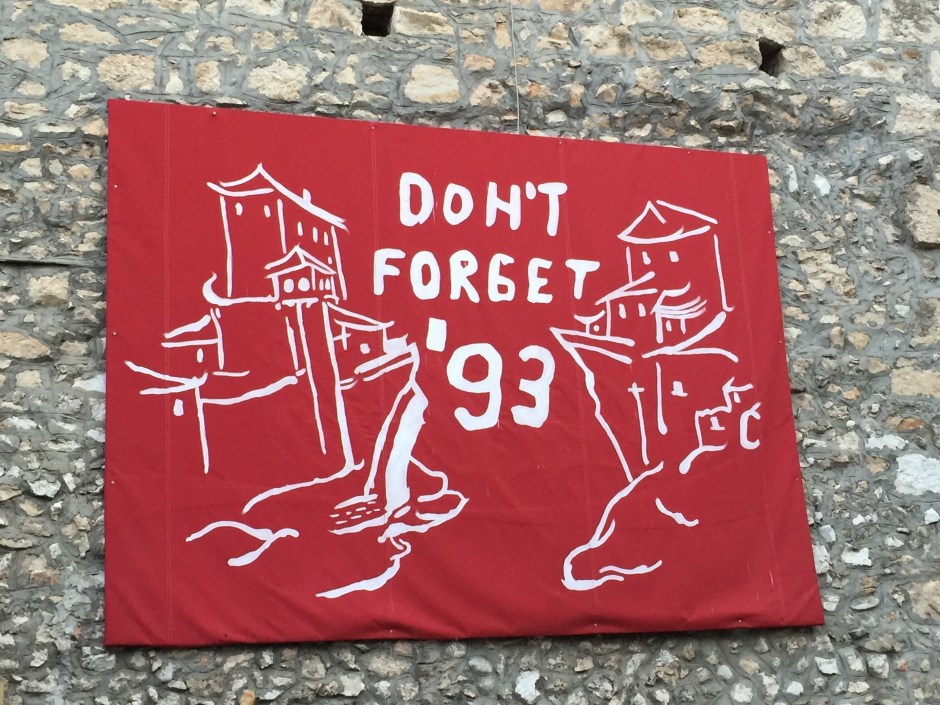
Week 128 September 10, 2016

Dear Sweet Family and Friends, it is awesome when Loren and I hear from you, to catch up in what ways we can while we are journeying. Finding your comments on our blog is always a gift as they reinforce parts of our journey’s journal. We also treasure your emails. Thank you for keeping in touch!
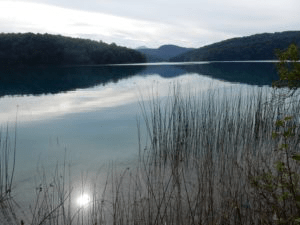
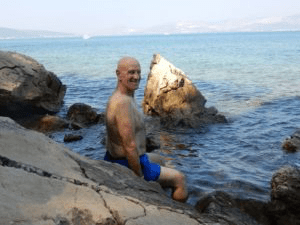
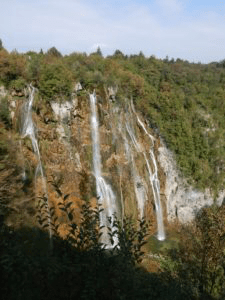
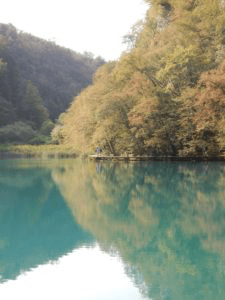
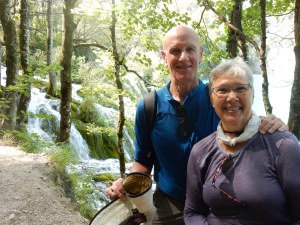
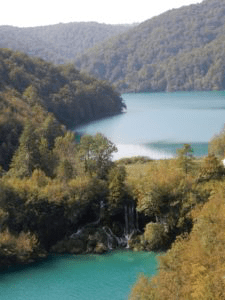
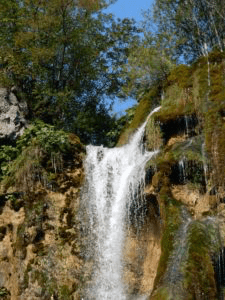
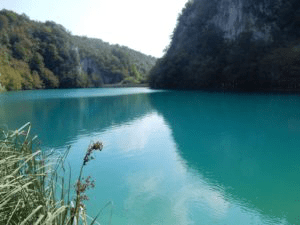
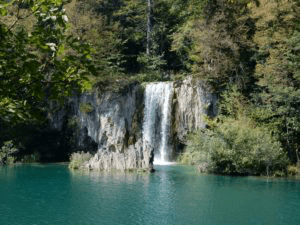
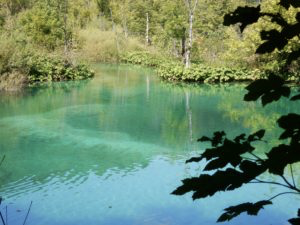
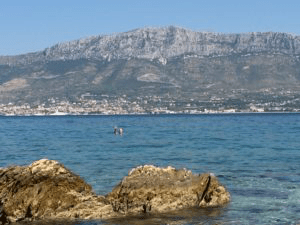
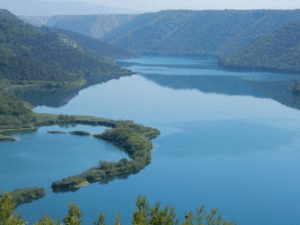
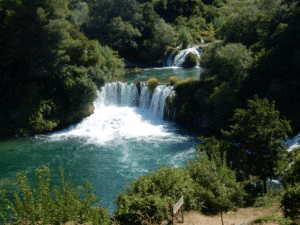
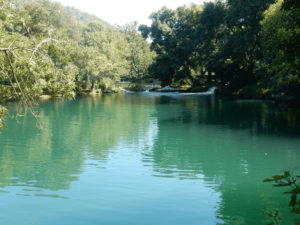
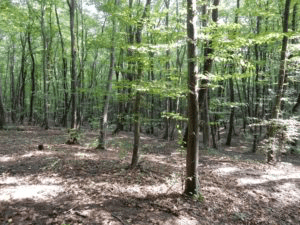
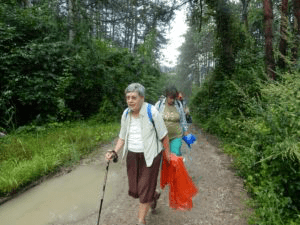
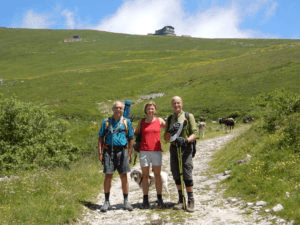
One day this week while still in Croatia we hiked 6 kilometers round trip to the river near Plitvice Lakes to swim, as no swimming is allowed in the NP anymore. Entrance 1 of the park was just 500 meters from where we were staying. Another day I hiked a good part of the park route marked “K,” while Loren and our AirBnB host’s son hiked a longer and more strenuous trail. My delight was with the many ducks, aside from witnessing more outstanding beauty in nature. Last week Loren and I had hiked route “A” and some of route “F.” The trails are well marked, and, an easy to read karta – map, that we bought for 20 Kuna – about 3USD, helped.
pastedGraphic.png pastedGraphic_1.png
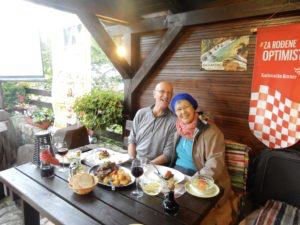
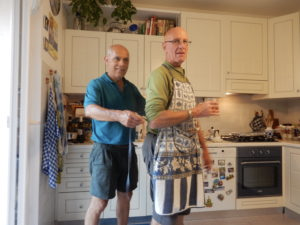
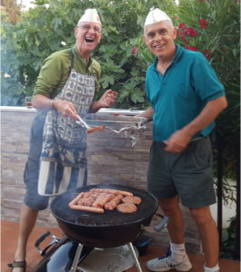
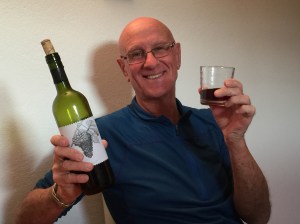
This week too we celebrated Loren’s birthday! It was a big one – he is now eligible to collect the first level of Social Security, if he decides to do so. Applying for Medicare – should it look the same in three years time – is on the horizon. We enjoyed a bottle of local red wine, a gift that our AirBnB host in Split had sent us away with last week to help us celebrate. We splurged on a dinner special-for-two of our first young goat meat at the family restaurant where we had celebrated our anniversary last week. This dish was not available to us on that evening because it requires advance ordering, as it takes two hours to cook. Both nights we had complementary snifters of Rakia – plum brandy, which went down more smoothly for me this night, being the 2nd time…
IMG_6528.jpg pastedGraphic_2
We felt fortunate that we had had three gorgeous days of hiking in Plitvicka Jezera Nacionalni Park. Our last full day in the area turned out as predicted: completely rainy. Loren learned from our AirBnB host’s son that the area is a rain forest, even though in winter it snows and freezes. So, we made our last day a rest day.
pastedGraphic_3
We then headed by bus to Split overnight, back to our same lovely host in her comfortable AirBnB. Then, we split Split, to travel by daytime bus to Mostar in Bosnia and Herzegovina. The Dalmatian coast south of Mostar reminded us of Big Sur, except for the nearby islands. There was an incredibly long line of cars and campers at border control. Our bus driver bypassed them all – fortunately the only car coming in the opposite direction pulled over for us! We arrived to where the immigration officers board the buses, much more quickly had he not jumped the line, otherwise our passport verification wait time would have been longer than some we had experienced in Africa.
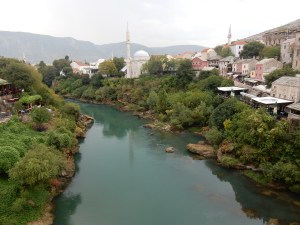
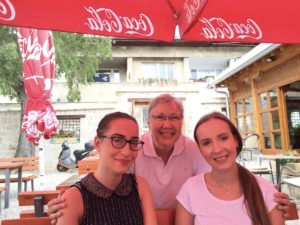
We are now settled in our Mostar AirBnB with delightful sisters as our hosts, both college students. We treated them to lunch and they introduced us to their arts. One sister has much talent in debate and drawing, the other is a gifted singer who shared with us Sevdalinka Emina, a traditional Bosnian folk song of yearning. It tells a touching story of a beautiful woman in a garden who is unmoved by her admirer’s greeting in her task of watering of the roses. Our hostesses’ great-grandmother is famous for writing the lyrics to a version that was made popular by a local musically talented doctor. As if that were not already a special story, this sister was chosen by audition at 10 years of age to sing this song at the celebration of the grand re-opening of the Old Bridge in 2004. It had had to be rebuilt – so well that it looks original – after being demolished in the civil war.
pastedGraphic_4.png DSCN1728.JPG
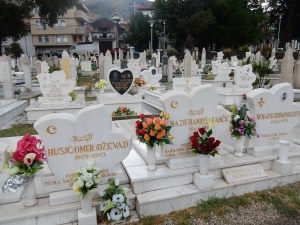
On the topic of the war which is hard to avoid seeing the lasting effects of and talking about while walking around town, we came across a local park that had had to be converted for use as a cemetery. Headstone after headstone records the death year: 1993. We also visited the War Photos Exhibition on permanent display at the Old Bridge. 
pastedGraphic_6.png DSCN1686.JPG DSCN1670.JPG
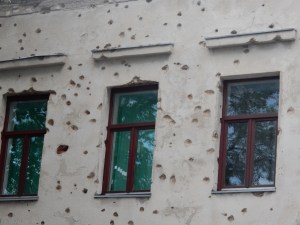
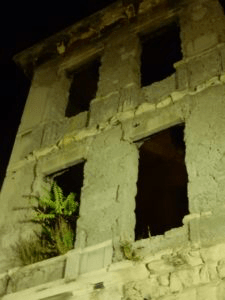
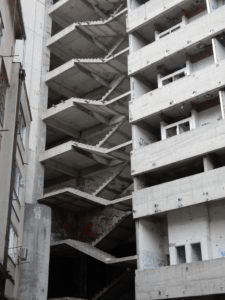
Then, while on a one day tour, we finished the day at “Sniper Tower,” a formerly attractive, modern glass building where mercenary gunmen had stationed themselves. Around the perimeter are still chunks, chips and shards of plate glass fragments. 
pastedGraphic_8.png
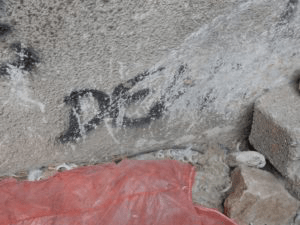
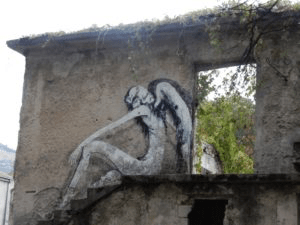
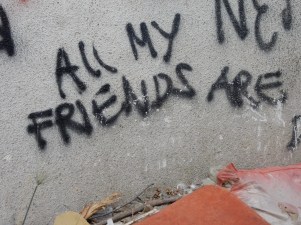
The building, like so many others 20 years later, is simply a multistoried mortar-wounded concrete shell. Artists have left myriad messages in a 2016 Street Art Festival.
pastedGraphic_9.png
I learn best in a hands-on, experiential way, and on our journey I am learning so much. I had known of the unrest in Belgrade – capitol of the former Yugoslavia in the early 1990’s. But I had felt so far removed; I remember feeling a vague, sad awareness at that time. Being in Bosnia and Herzegovina now, the aftereffects of the struggles as communism fell and regional boundaries in the Balkan countries were sometimes violently fought for, are highly visible. Mortar damage is tangible, and there is a palpable heaviness. We did not experience this visible or spiritual vestige in the areas of Croatia where we had visited. So many of the locals’ family members and friends here were either killed, or took refuge in other countries, and most of them have not returned.
DSCN1637.jpg pastedGraphic_13.png
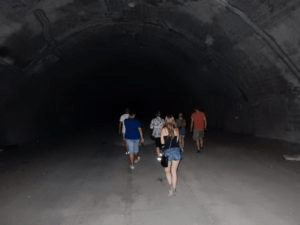
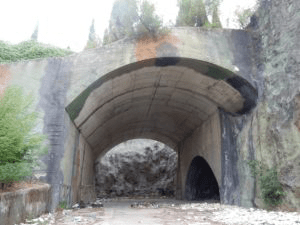
We also visited “Tito’s Aircraft Hangar” on the day tour. This was tunneled deep into a mountain during the Cold War, for storing planes and for protection should there come a World War III. It seemed similar in some ways – especially the massive amount of concrete used for the walls– to bunkers we had seen at Normandy beach. Hitler had designed those for protection of what he saw to be Third Reich’s 1000 year reign. What can we learn from all this? How do we protect all humanity from violence? I believe we can learn to communicate in better ways, to be able to live in peace on our precious planet. Now and forever. Ok?
pastedGraphic_14.png pastedGraphic_15.png
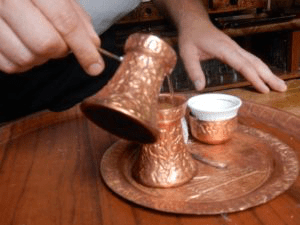
On a lighter note, other stops on our day tour were the historic Blagaj Dervish House, a place of study for the Sufi’s during the Ottoman Empire. It was so well built and protected then, that it still proudly stands against the mountain, beside the river, of its origin. It is where Whirling Dervishes come annually in mid-May to practice their dancing meditation. This is where Loren and I shared our first cup of Turkish coffee.
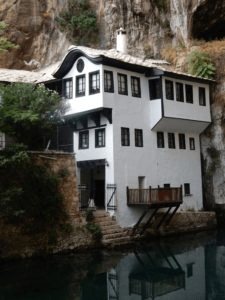
pastedGraphic_16.png pastedGraphic_17.png
Another stop was for a hike up a hill to the medieval castle and fortress of Pocitelj. The one other stop was to Kravice Falls, where we had lunch. Loren swam in the take-your-breath-away cold water.
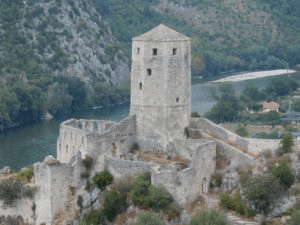
pastedGraphic_18.png pastedGraphic_19.png
One more thing I have learned from our journey is how to correctly pronounce Herzegovina: Herz-eh-govina, not Herzgovin-i-a as I used to mistakenly say. On Sunday we will return to Croatia to visit Dubrovnik for two days, a place that Loren has been interested in visiting for 40 years. I am also interested in seeing the War Photos Limited temporary display there, a larger version of the Exhibition to what we saw here in Mostar, including current images from Syria… I have so much still to learn.
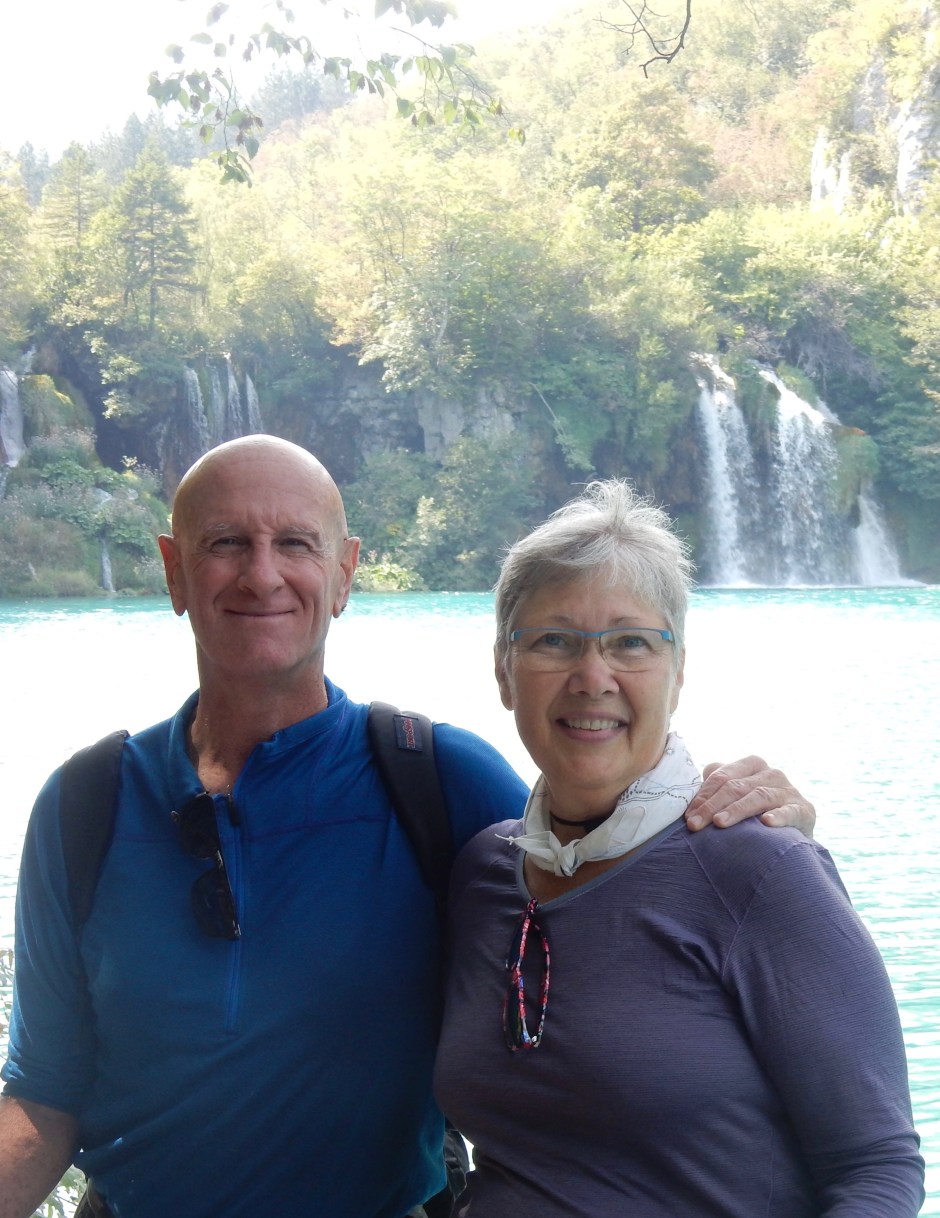
Week 127 September 3, 2016 – 25 Years!

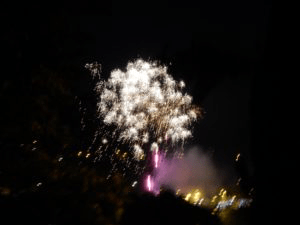
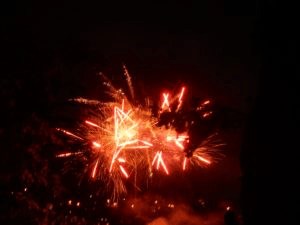
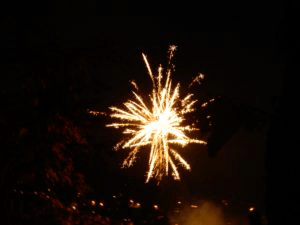
Dobradan! Pozdrav! Good Day! Greetings! from Croatia, and, Happy Labor Day weekend!! I have to admit we feel more than a bit distanced from that U.S. holiday this year. We were still on the Dalmatian coast of the Adriatic sea in Split at the beginning of this week. One evening there was an extensive sound of fireworks, and, on looking out our window, I made a few photos. Our AirBnB host knew of no reason for the show. Maybe someone knew that Loren and I were having a wedding anniversary this week? Ha Ha Ha!
pastedGraphic.png pastedGraphic_1.png pastedGraphic_2.png
We took another hike on the peninsula and over Mt. Marjan – said Mar-yahn, to Bene – said Behneh, beach, then had lunch including traditional Croatian style smoked-and-wind-dried ham at Lucia’s – pronounced Lucheezia’s restorant – I think you know how this is pronounced, overlooking the beach. We walked more through Diocletian’s open palace with the period staff, and simply relished in what has felt like the most-strung-together days of gorgeous weather of our whole journey, at least in many months. On our third walk to the Split peninsula, we rented bicycles to see more of Mt. Marjan.
pastedGraphic_3.png pastedGraphic_4
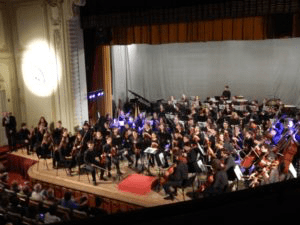
We also attended a second Chamber music gathering at the Split City Muzej – Museum. With both those cozy evenings, and from seeing other recent musical performances, it became more apparent to me how much professional musicians may emphasize their emotion with their facial expressions, and, as if they are dancing with their instruments, through their body movements.
We were up early the next morning for our 7am bus ride of four hours to arrive in Plitvice – said Plit-veet-seh, Lakes. There has been much reconstruction in this area since the time of the former Yugoslavia. The house we are staying in – very near the National Park – is brand new, because, the home that the owner had grown up in on this site – we learned from his daughter who spoke better English, was destroyed during the war. When he rebuilt it, he added enough space to offer rooms for rent. After a walk around the Rastovaca neighborhood, it was plain to see many other homes here are new too. Nearly all have similar looking signs for available rooms, and, they do fill up. At dinner we had a nice conversation with a young British couple who had traveled a year in Asia, at breakfast we met a young couple from Ireland though the wife hailed from Croatia.
pastedGraphic_5.png
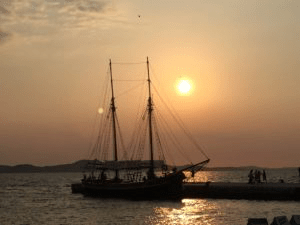
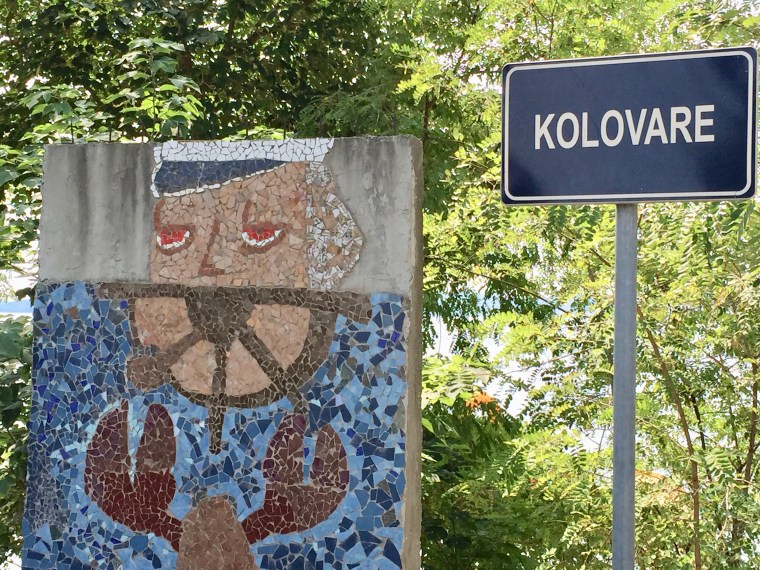
We rode a 9:30am bus for about 2 hours to see Zadar. We spent the afternoon at Kolovare beach, where we had natural shade below the trees, for when we weren’t dipping in the refreshing clear water of the Mediterranean. We brought a picnic supper to watch sunset near the Sea Organ. The Sea Organ is the attraction that enticed us to travel here – a set of multi-length pipes architected in such a way that they are “played” by the waves as the tide comes in. The effect produces lyrical sounds that remind me of whale calls. By the way, can you find the Croatian word for chocolate on the cookie package in my photo?
IMG_6544.jpg pastedGraphic_7.png
After sunset the Pozdrav Suncu – meaning Greeting to the Sun, a solar powered night light show began, as we enjoyed a pleasant conversation with two families on holiday from Italy. Experiencing these two awesome wonders of the modern world was the highlight of our memorable day in Zadar. With the only bus option that allowed us to see what is referred to as “The best sunset in the world” with leaving Zadar for Plitvice Lakes at 23:00 – 11pm, it was a long day. After midnight on the way back we had one more awesome experience – we acknowledged our 25th wedding anniversary! 9/1/91 to 9/1/16, but who’s counting?
pastedGraphic_8.png pastedGraphic_9.png pastedGraphic_10.png
Speaking of wonders, we waited until September 1st for our first day to visit Plitvice Jezera – Lakes, National Park, what my cousin claims as the “8th Natural Wonder of the World,” because, the entrance fees were much less expensive than in August, and, every little bit we can save allows us to travel that little bit longer. And, speaking of September 1st, we enjoyed a lovely dinner at Petra’s, a recommendation by and half-mile walk from our AirBnB home, to celebrate our special anniversary.
pastedGraphic_11.png pastedGraphic_13.png DSCN0632.JPG
Ok, so I agree, Plitvice Jezera *is* more amazing than Krka Falls. What we saw there in two hours compared to what we have seen here so far in two 6 hour hikes, is incomparable. Here we have seen the most number of waterfalls in one place that we have ever encountered. With warm autumn sunshine, cool mountain breezes, trails to meander, sounds of waterfalls, views of nature, what more could one ask? Well, ok, one could ask for a few less people. We understand 8,000 people were in the park on our second day there, which is only half the number of those who visit in early August. But, still, 8,000 are a few thousand too many!
pastedGraphic_14.png pastedGraphic_15.png pastedGraphic_16.png
It is hard to picture what this area was like 25 years ago. Hearing from my cousin who wrote how her daughter-in-law had to hide in tunnels for safety before she fled Croatia, and that her paternal grandmother died at the hands of invading troops, helps me imagine maybe just a snapshot of that time. The “Iron Curtain” that delineated east from west had prohibited travel in Eastern Europe for westerners and the western world for most eastern Europeans. This year, our host is seeing more Americans visit than people of other nationalities. As so many Europeans already know, this area is well worth visiting for its exquisite natural beauty. I am grateful that there is now a peace and prosperity here, and feel privileged to spend time seeing the incredible vistas.
pastedGraphic_17.png pastedGraphic_18.png pastedGraphic_19.png
PLEASE NOTE: This week we have decent internet coverage, but we may not have service in the countries we are visiting next. Please visit here again, I will share my weekly post when I possibly can.

IMG_6544.jpg

Week 126 August 27, 2016

“How could it possibly be the end of August?” I ask. Loren has remarked several times, “We only have so much time in life and we don’t know how much time we are going to have.” That is true both of life and on our journey. In the meantime we are having the times of our lives and are so very grateful to be realizing our dreams of travel now. We will just continue to take it one-day-to-three-months at a time.
This week began with us attending Sunday service at the Kolozsvar 1 congregation in Transylvania, also in Cluj, Romania. This needs a little explanation, and this is what we were told: Kolozsvar, is the name of the city in Hungarian, which is the language of Transylvania. After World War I the region of Transylvania was taken from Hungary and given to Romania. For a brief time during World War II Transylvania was returned to Hungary, then at the close of World War II it was again turned over to Romania. To the Romanians, Kolozsvar is named Cluj, and the Romanians do not understand why the Transylvanians do not speak the Romanian language. The Transylvanians prefer to retain their Hungarian language and heritage, though are content to be in Romania.
IMG_6380.jpg
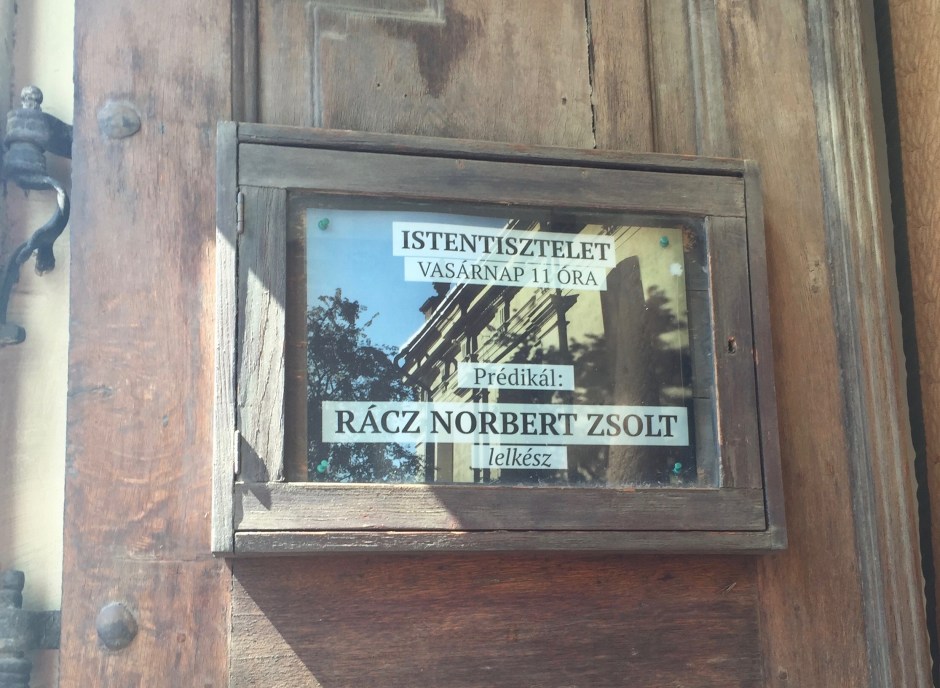
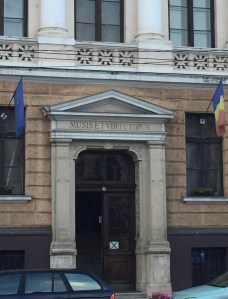
Kolozsvar 1 is one of three Unitarian congregations in the city of Kolozsvar. This one is near our AirBnB, in the same block on the same street as the Unitarian Headquarters building, and, the Unitarian schools – both the seminary and the primary-through-high-school, school. We felt fortunate that the current intern at Kolozsvar 1 was able to sit with us during the service and to translate the concepts of the sermon, as had been done for us in Arkos and in Medias by each minister’s wife. As you might notice from the sign on the door which is as historic as the whole area I might add, how different the Hungarian language is. I can make out words, what I believe might say “Worship 11am” and possibly “Preaching Today:” and the minister’s name, but with little to no certainty.  
 pastedGraphic_1.png
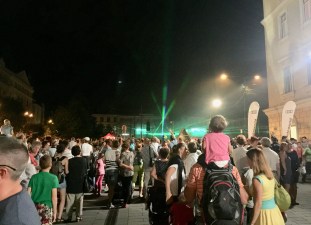
Sunday was also the finale of the Hungarian Cultural Days in Kolozsvar. We attended part of a marathon org – organ, concert, then with our AirBnB host we saw an operatte – a performance of popular songs which included in Hungarian what we could recognize as If I Were A Rich Man. She also helped us purchase a local favorite langos – said longoosh, which is a pastry filled with cheese and sauce. Loren and I then saw a brass performance – the musicians sat high over us on the balcony of the large church tower.
IMG_6409.jpg
We met up with our host again for the evening concert which ended the festivities. In all, Hungarian Days are a delightful, family friendly community gathering. Our friend, the Unitarian minister had warned us that the concert would be “many people – like 30.000, celebrating together.” We were happy to be two among them!

IMG_6439.jpg IMG_6441.jpg

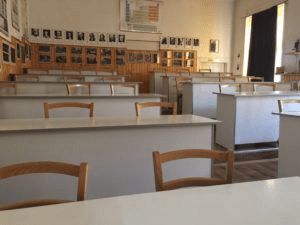
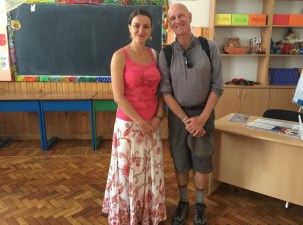
The next day we met our friend for a tour of the Unitarian school where she had attended herself and where she now teaches Religion and Social Studies. The building was built in 1900. Fortunately the two early museums inside have been preserved through all the turmoil during that century. We enjoyed a meaningful visit over lunch with her afterwards. It is sad that Transylvania is so far from California as we would be happy to spend more time with her and the other fabulous Hungarian Unitarians who we met and visited with too briefly while we were here.
IMG_6424.jpg pastedGraphic_6.png IMG_6466.jpg
It was fortunate thst the weather waited a day for the Hungarian Days events to finish before it let loose with a storm. Our afternoon hike planned turned into a visit to one of the malls in Kolozsvar. I needed to replace the camera I have become so fond of but with the sands from Namibia still causing it to act up more – or rather neglect to act properly at all, it was time to bid it farewell. I want to mention how often we have been asked on visiting in parts of Europe and Africa, “Where you come from?” Loren likes to respond with playing a guessing game. He encourages the person to enumerate with him where the English speaking areas of the world are: Australia, Canada, England, Holland also sometimes comes up in the list, New Zealand, Scotland, South Africa, The United States of America, and, then have them pick. The United States is usually not their first guess…
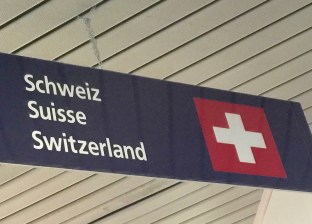
It took us all day to travel from Kolozsvar/Cluj, Romania to Split, Croatia, due to limited airline scheduling. In the waiting room for the first of our two flights, I heard chatter, then smiled at being part of the world community when I heard “email” and “internet” interspersed in otherwise unrecognizable words. It reminds me of years ago when on a business trip to Canada and, sitting in a restaurant by myself I overheard “income tax” within a French conversation… Coincidentally we actually spent most of our travel day to Croatia in France – at the borders of Germany and Switzerland, but, in the technically non-Schengen Basel/Freiburg International airport in Mulhouse, France. We were glad to successfully pass through immigration with our knowledge of the Schengen visa.
IMG_6480.jpg IMG_6481.jpg
Our day ended with a night flight into Split, Croatia. So Loren jokes, “We split for Split!”
pastedGraphic_10.png
In Split, our AirBnb is situated next to the train and bus stations, which are next to the harbor. There are a vast number of sailing vessels, cruise ships, and tour boats lining the docks. It continues to be August – when most of the people of Europe are still on holiday, and Split is definitely a popular destination. I totally understand why! We have spent time exploring the city centre which spills out and around the preserved and restored ruins of the Diocletian Palace, built during the Roman Empire.
DSCN0071.jpg DSCN0039.jpg DSCN0042.jpg
We have also hiked around the end of the peninsula and over Mount Marjan to put our feet in the beautiful Mediterranean Sea. Well ok, so I did that, while Loren swam in it. All along we had the pungent smell of pine, the relentless sound of cicada, the sun shining in the blue sky over breathtaking scenery… in other words, all pleasant experiences. 
pastedGraphic_14.png pastedGraphic_15.png pastedGraphic_16.png
My cousin, who’s daughter-in-law hails from Croatia, had warned us about the food and needing to work off the additional extra weight we will gain… Cherry grappa, yum! Fresh fruits, soup and veggies with garlic and oil that our AirBnB host has provided for us, yum! Yum! So, we also did a bit of hiking around the spectacular vistas of Krka – said Kirka, National Park. It is so impressive that we plan to return before we leave Croatia.
pastedGraphic_17.png pastedGraphic_18.png pastedGraphic_19.png
Tomorrow we will take another hike around the peninsula at least – our extra calories need to be worked off!
PLEASE NOTE: While this week we have sufficient internet access, we may not have service in the countries we are visiting in the coming weeks. Please visit again, I will add my weekly post when it is possible.

Week 125 August 20, 2016

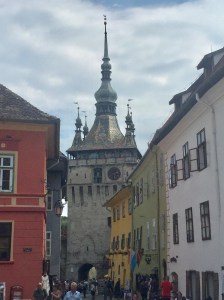
Buna Ziua! Said Boo-nah Zee-wah, this is our last full week to be able to say Good Day in Romanian. Well, just for now I hope… Loren and I started this week by attending Sunday service at the Segesvar Unitarian Church, in the Romanian named city of Sighisoara. Segesvar is Hungarian – we are getting used to the dual names of places here. Though we were unable to understand the Hungarian sermon, we could follow the hymns a bit and it was nice to be in community in their cheerful sanctuary. 
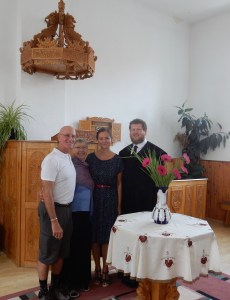
Toward the end of the service the minister came down from the elevated pulpit, asked something in Hungarian, a congregant responded affirmatively, then came forward. This young man then translated in English that the minister had received a phone call at 9am from a couple from California and if they would like to come to the front to say a few words about themselves… which we did and the young man translated for us. As we left the sanctuary the Reverend asked us in English to come to his home afterwards. Loren and I then had a delightful visit with he and his wife, who fed us a delicious meal, and, gifted us with homemade brandy and jam, and, homegrown honey!
pastedGraphic.png
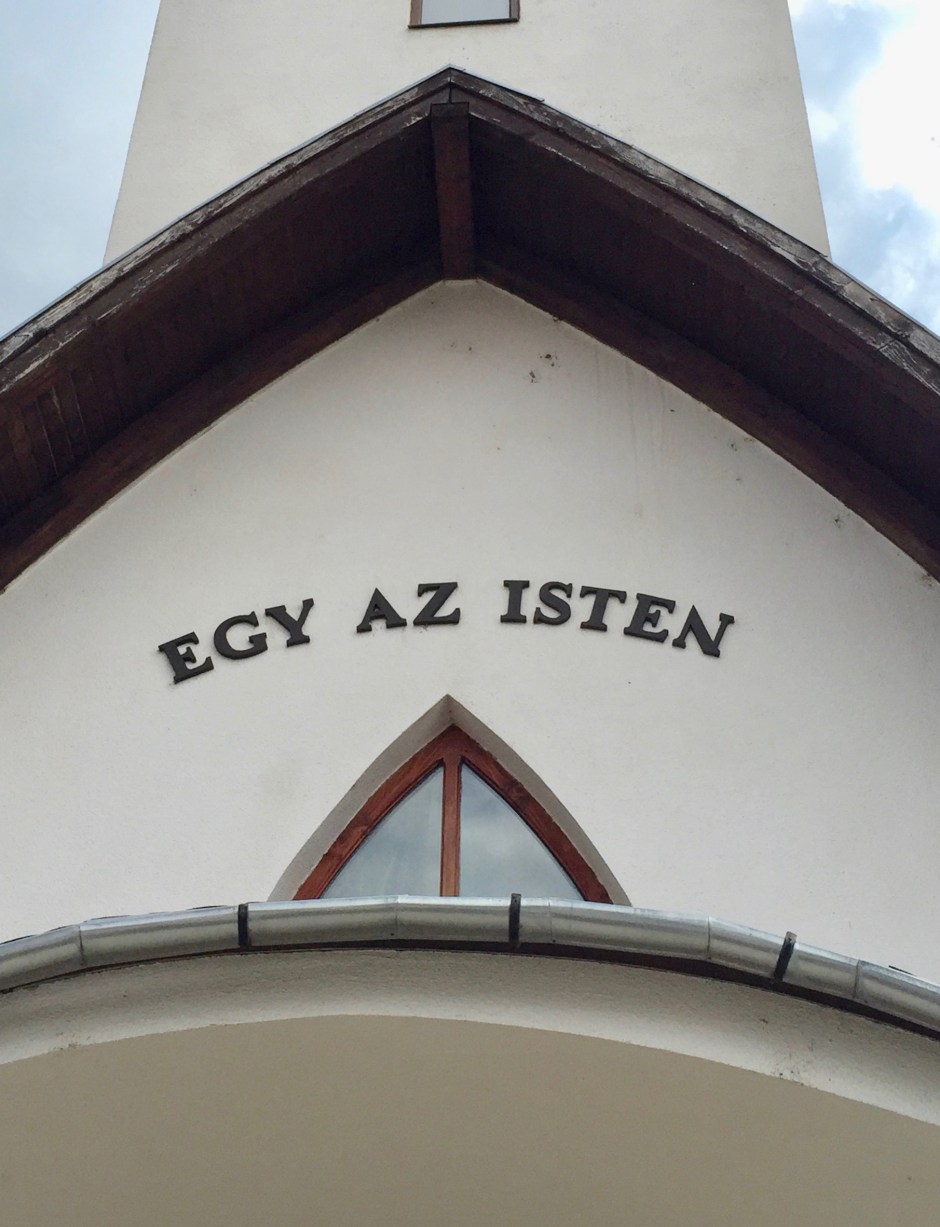
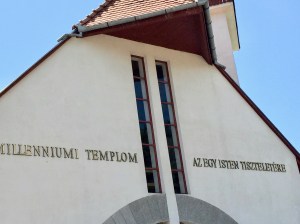
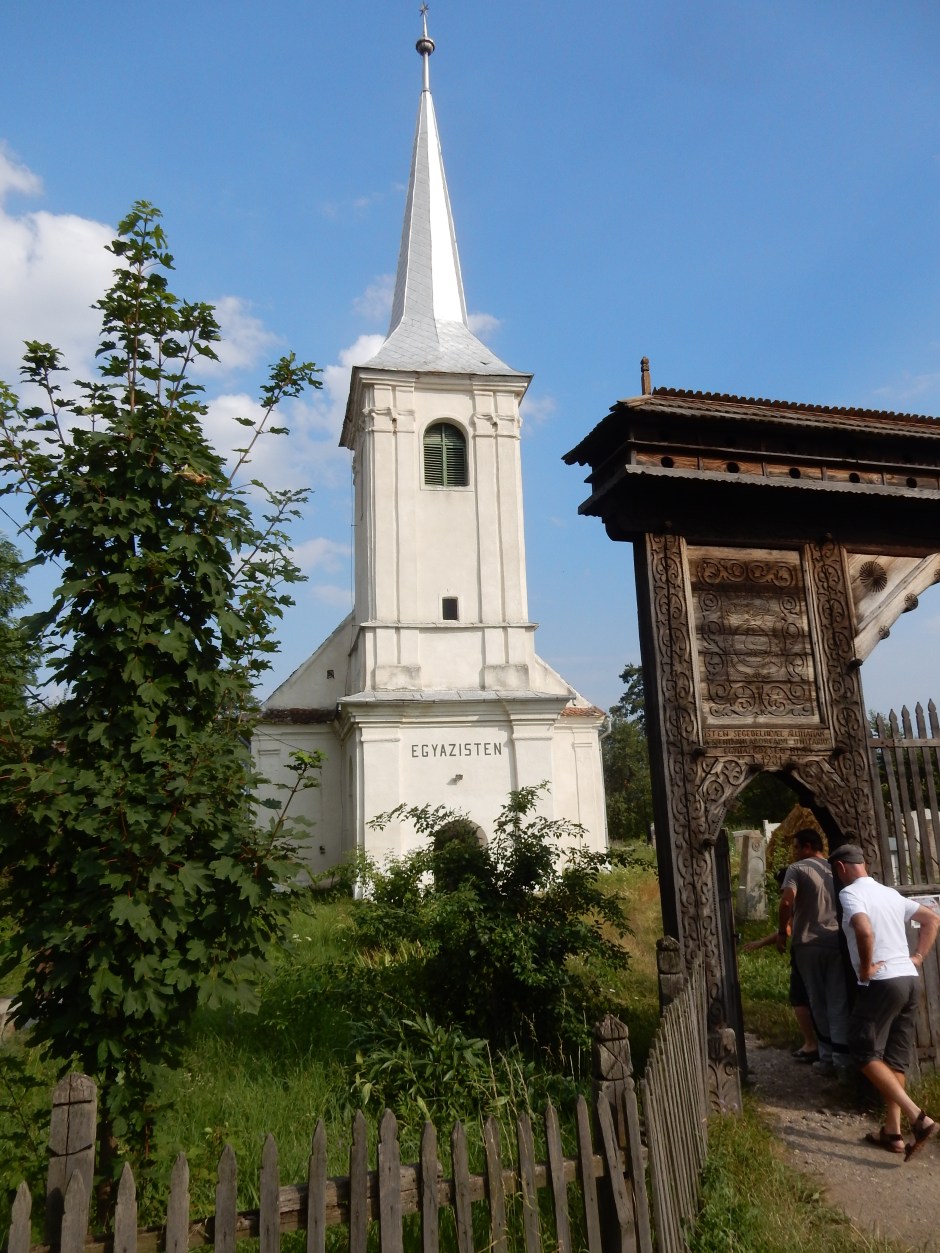
While his wife prepared lunch, the minister drove us to see his other church – many Unitarian ministers here serve multiple congregations. What was amazing is that we had noticed a Unitarian church when we drove around Lake Sonata last week, and, we made a photo of the prominent Unitarian motto: Egy Az Isten – said something like Edge Oz Eesh-ten, for God is One, in Hungarian. This is what distinguishes our denomination, Unitarian in questioning the Trinity over the Unity of God. It turns out that this minister had previously been the minister there for over 11 years.
IMG_6144
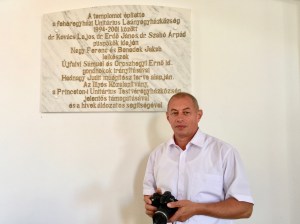
He also has the distinction of being formally recognized for the erecting of three Unitarian church buildings, including this one we visited together, which is also a partner church to Princeton, New Jersey.
IMG_6159.jpg
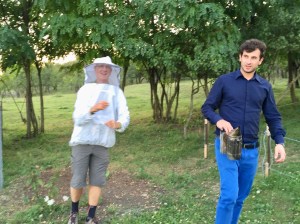
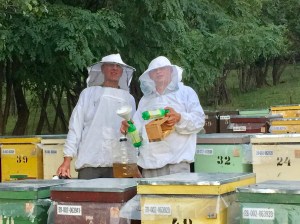
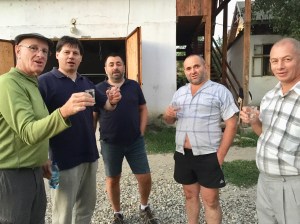
That evening we were invited to return to their home to meet their son, who is a Unitarian ministerial student in Kolozsvar in Hungarian or Cluj in Romanian, and his girlfriend. Together with the Rev. his son, Loren and I went to the bee farm where Loren and his son helped him feed the newer colonies. I drove and took photos. I was not allowed to share in the subsequent toast of homemade brandy with another minister who lives at the property and other ministerial friends, because, there is zero tolerance of drinking and driving here. Good idea! Remember the “Romaniac” drivers I wrote about last week that Loren had identified? And that behavior is sans alcohol use…
IMG_6171.jpg IMG_6190.jpg IMG_6195.jpg
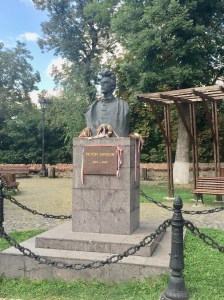
The gift bottle of the Rev.’s brandy was actually a blessing as Loren came down with the flu this week. It was bad enough that we had to cancel our plans to meet his son for a hike. The next day we did meet up with him – he was housesitting for his parents this week while they went to be with family in another village. We went for a walk together to the Citadel of Segesvar. But just that short hike was enough energy spent for Loren for the day. We were able to see the monument to Petöfi Sàndor, a national poet and hero who wrote the anthem for and is believed to have died in the Hungarian Revolution.
IMG_6197.jpg IMG_6202.jpg
He is known for being a writer on love and freedom. I especially like this poem of his:
I’ll Be a Tree
by Sandor Petofi

I’ll be a tree, if you are its flower,
Or a flower, if you are the dew-
I’ll be the dew, if you are the sunbeam,
Only to be united with you.
My lovely girl, if you are the Heaven,
I shall be a star above on high;
My darling, if you are hell-fire,
To unite us, damned I shall die.
The next day Loren was feeling more up for a hike to go up the hill with our new friend to see the beautiful views.
pastedGraphic_9.png pastedGraphic_10.png pastedGraphic_11.png
The next day Loren was nearly back to normal, so with our friend we had another hike to see more views. We enjoyed a snack at the hillside Vila Franka restaurant, walked back down, then bade our so-hope-to-see-you-again farewells. It was nice to spend this special time with him in Segesvar, hear of his studies in the travel industry, his travels, and now of some of his studies, experiences and travels as a seminarian. All best to you in your last year of school!
IMG_6287.jpg IMG_6292.jpg
A friend from California recently wrote: “Of course as you know from your travels, its the people you meet along the way that are the real change agents in your life.” We find this is absolutely true, week, after week, after week, after week… and the best ones are the ones who become lifelong friends.
IMG_6196.jpg pastedGraphic_16.png
On the subject of weeks, this one is the nice round number of 125 since Loren and I packed up and left home. Wow! And as we packed up to leave Segesvar, I was so aware of all the zippers and snaps that Loren and I cinch up each time we leave one place for another. Fortunately all the fasteners keep cinching for us!
IMG_6308.jpg IMG_6309.jpg
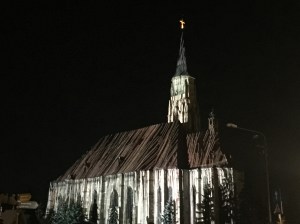
We rode by bus back to Cluj where we returned to the same AirBnB. This week is a big celebration called Hungarian Days here, and, with her, we saw a light show projected on the main church. When Transylvania was ruled by the Unitarian King John Sigismund in the 1500’s, this church was Unitarian. Now it is Orthodox. We have learned that each denomination here has its own different greeting. I will finish with sending out the beautiful Unitarian greeting in Hungarian: Isten áldja! similarly said something like Eesh-ten Auldio, for God bless you! On Tuesday we will head off for Croatia…
IMG_6356.jpg IMG_6354 2.jpg IMG_6362.jpg
PLEASE NOTE: While this week we have good internet coverage, we may not have service in the countries we are visiting in the coming months. Please visit here, I will add my weekly post as I can.

Week 124 August 13, 2016

Loren and I are moved when we hear from family and friends that our journey is inspiring to you. Thank you for keeping in touch with us! This week we had an email from another couple – offhand we can recall previously hearing from three other couples or families who have taken, who are on, or who will soon begin their own extended travels as a result of learning about our experience. Yay! May you too have the fortune to realize your dreams.
We had a nice stay in Sibiu, enjoying a dinner out with our AirBnB hosts at their favorite restaurant, then we had a couple of walks through the City Centre in what was once a double walled citadel. The apartment where we are staying was a few stories up, and with taking the stairs we had a little extra exercise this week. 
DSCN9303.JPG pastedGraphic_1.png pastedGraphic
Then we enjoyed staying in a “traditional Romanian house” AirBnB in the country near Sibiu, a charming large home respite next to a creek. The host is also the owner of six delightful stray female dogs. While on a hike with her and them in the hills she attracted yet a seventh to her pack – this one a male.
IMG_5964.jpg pastedGraphic_4.png
Our host accompanied us the hour and a half to make sure that we would find our way to Medias – said Meh-dee-osh, for a Unitarian Sunday service that was translated for us by the Reverend’s kind wife who sat with us. One thing our AirBnB host said afterwards, which resonated for me is: “God’s plan is bigger than our own.” Da da da – Yes, yes, yes, in Romanian, that is so true.
DSCN9352.jpg
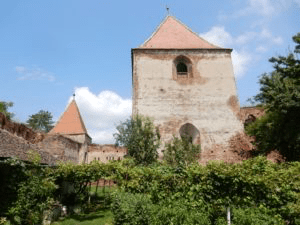
On the way back to her home we enjoyed a picnic at a local preserved fortress together, where we were able to climb the precarious steps all the way up into the bell tower where the view was outstanding. We also visited a Festival – pronounced fes-ti-VAHL, for traditional music and more traditional food.
pastedGraphic_7.png
We covered a lot of kilometers in our rental car this week. 
     “Claire, you have become good at navigating roundabouts,”
an impressed Loren said as we drove from Sibiu to see the fortress in Alba Iulia – said you-lee-ah, home of the biggest citadel in Romania. 
     “Claire your rediscovered New Yorker driving skills have allowed you to drive more
       like a Romanian, I mean, like a Romaniac,”
Loren said further, using his invented word for the daredevil drivers we have seen, as we neared Cluj-Napoca airport to return our rental car in heavy traffic. Once a New Yorker, always one, I guess. We have been asked on several occasions what we think of Romanian drivers…
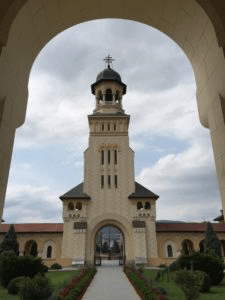
At Alba Iulia I was a little disappointed because the palace was home to the only Unitarian King in history – King John Sigismund during the 16th century, but, we found absolutely no reference to his reign. Regardless, it was impressive, with a modern cathedral built in honor of the coronation of Ferdinand and Maria.
pastedGraphic_8.png
In Kolozsvar – Hungarian for Cluj, we had the privilege of having our former Unitarian Universalist Fellowship of Sunnyvale California Partner Church minister from Kolozsvar and her daughter join us for dinner. We invited our AirBnB host, and her neighbor – a long term friend of hers who is also a retired Unitarian minister. What a small world! It was wonderful to visit with our friend after all these years. Then Loren and I enjoyed a walking tour of some major sights of the city with our AirBnB host.
The next evening we had the pleasure of having dinner again with the retired Rev and his wife. He gifted us with a book in English – translated from the original Hungarian, with reflections of Transylvanian Unitarians about our faith. It is a treasure! One chapter is his own translation of the Unitarian Catechism that youth in Transylvania must prove they have learned at their confirmation. Another chapter is by a Transylvanian minister, who years ago had studied in Berkeley and who I remember preaching to our Sunnyvale congregation. His chapter is a delightful read of his experiences and reflection on the U.S. UU’s, which triggered more of my own memories.
pastedGraphic_9.png
Loren and I also enjoyed a day hike on a path through enchanting woods with some local Hungarian-speaking Transylvanians who hike weekly and who our AirBnB host helped us find. A couple of them spoke a little English, and one spoke some Italian, so, in addition to being good exercise it was socially enjoyable too — including the time when it poured down rain for which we sought shelter. It rained some all the way back too. One of the women was also a Unitarian, and another was scouting out wild mushrooms in the forest as we hiked.
pastedGraphic_10.png DSCN9597.jpg pastedGraphic_12.png
That evening we went to a local Org – Organ Concert in the Reformed Church. As much as I love music, I recently have come to the conclusion that there is sometimes a fine line between music and noise. I realize though that this applies to all the arts. I therefore respectfully request to amend the age old idiom about Beauty’s Beholder with this: Delight may or may not be found in all of one’s senses: sight-sound-taste-smell-touch and any others you care to include, not limited to just one’s eye.
pastedGraphic_13.png
On our last full day in Kolozsvar for now, our former Partner Church Rev. gave us a tour of the Transylvanian Unitarian Headquarters, where she now works as Secretary to the Bishop, and for their seminary. It was impressive to stand in the hall where leaders of the six districts of Transylvania and one district of Hungary meet – the connection between Transylvanian and Hungarian Unitarians just resumed in 2012 — after a break of nearly a hundred years due to European political turmoil. The beautifully wooded walls are fringed with images of former Bishops and lay leaders, hung high. The seminary includes a chapel where daily student worship services are offered.
pastedGraphic_14.png pastedGraphic_15.png
The next day we took a train to Sighisoara in Romanian – Segesvar in Hungarian, which took nearly six hours. The first 45 minutes included waiting for the train to arrive, then to depart, the Cluj station. No wonder there are warnings that trains may not be on time. But, that also gave us more time to have fun with the five year old Romanian boy and his grandparents who shared our compartment. With hand gestures and the ways that the Romanian language is like Italian, we learned it was his first ever train ride! In all those hours he tried many times and ways to lie down for a nap, but he was too excited to have his riposo.
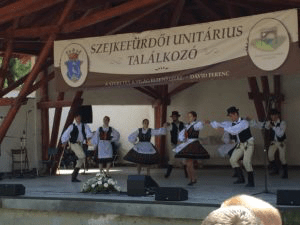
In Segesvar, we rented a car to be able to drive to a Unitarian Gathering. I wish we knew some Hungarian because even with the invitation in hand, I am at a loss to explain more than that we visited park in a wide open space with a stage near the congregation of Szekelyudvarhely in the village of Odorheiu Secuiesc, for the Szejkefurdoi Unitarius Talalkozo. I do know it was anticipated that 2000 people would attend. The previous few days of cloudy, rainy weather cleared for a mostly sunny day for the event.
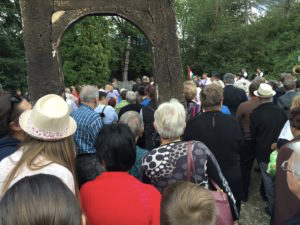
Some people were there in traditional costume, and some of them participated in the ceremonial worship or performed dances afterwards. We sang Hungarian hymns and were offered the Lord’s Supper (communion). When I said, Ishten Aldjon – God Bless You, to the Priest who gave me Communion, he replied in English, “God Bless You,” which felt like a dear connection.
pastedGraphic_16.png pastedGraphic_20.png
We all then followed the procession of ministers through a long corridor of wooden portals in the nearby field to honor and place commemorative wreaths on the grave of Orban Balazs. We were able to briefly visit with a few of our friends from the Arkos camp who we had met last week. On our return trip to Kolozsvar, we drove through other areas of the countryside. In all, another lovely day.
pastedGraphic_17 pastedGraphic_18
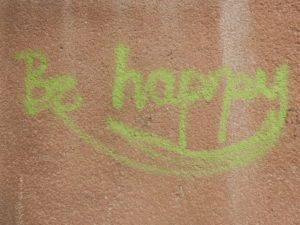
I am aware that emergency vehicle sirens in Romania sometimes sound like the ones in the USA – they more often whirr in crescendo and decrescendo, instead of blaring the two alternating tones like in most of the rest of Europe. I am also aware that as we have traveled through parts of Europe and Africa that I have smelled more cigarette smoke in public places, smelled more unpleasant scents in the streets, more harsh chemicals, exhaust, burning rubber and smoke from intentional fires than I am used to in California. How I wish people were not exposed to such toxins… more reason to resume my Bikram yoga practice to eliminate those toxins from my body. Until then I will follow the advice I found from a graffiti artist in English in Kolozsvar this week:
pastedGraphic_21.png
PLEASE NOTE: While this week we have an internet connection, we may not have viable service on a weekly basis. Please visit this site again, I will upload my posts when and as often as I can.

Week 123 August 6, 2016

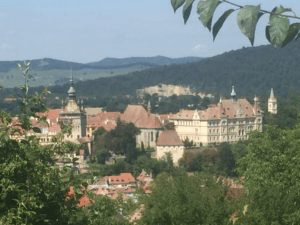
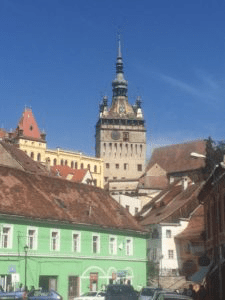
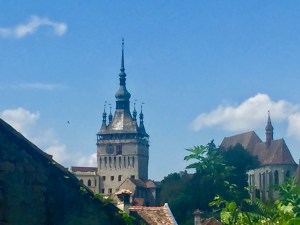
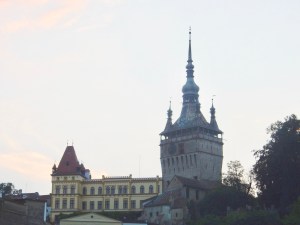
Loren and I began this week still in Sighisoara, or Segesvar in Hungarian, Romania. We took a walk around the fortified town, visiting the Muzeul de Istorie – Historic Museum, at the medieval clock tower. Then we walked to the top of the hill where we had the delight of hearing a soloist and organist rehearsing some pieces in the medieval church, and, back down to our BnB through the old narrow streets.
pastedGraphic.png pastedGraphic_1.png
From there we drove on to Brasov – said Brahsh-hov, Transylvania, to the home of our next AirBnB hosts. They are hoping to make a go of their startup working together for environmental concerns. If you are interested you can visit their appealing website:
     Greentumble.com
We went for a wonderful hike with them and their hunting dog the next morning, in the nearby Piatra Craiului mountains.
pastedGraphic_2.png pastedGraphic_3.png pastedGraphic_4.png
Loren and I then drove the hour and a half to visit the Hungarian speaking region in Transylvania. We were invited by the minister of the Unitarian church in Szentivanlaborfalva, which was once the Unitarian Universalist Fellowship of Sunnyvale, California – our home congregation’s partner church, to visit overnight at a summer camp in Arkos – said Arc-ohsh. The children came from three neighboring communities – Arkos or Arcus in Romanian, Szentivanlaborfalva or Santionlunca in Romanian, near Targu Mures on the map, and, from Sepsiszentgyorgy or Sfanta Gheorghe in Romanian, and Saint George in English. Here 130 children conceived 13 rules – for example, “Be nice to each other,” “Tell an adult if you see a child crying,” among others to follow for the week. They danced, sang, made friends, and, decorated a joyful Welcome banner!
pastedGraphic_6.png pastedGraphic_5.png pastedGraphic_7.png
After the children went to bed, the adults enjoyed some social time. 
IMG_5936.jpg
Loren and I stayed overnight at the home of a lovely local family, who, along with other involved families helped us feel like we were already part of the community. We happily participated in singing some English verses that they knew among the many hymns and songs they sang in Hungarian. Camp ended with the Sunday Service.
After another delicious meal together, we followed the minister of our former partner church and his wife, also a minister, to Szentivanlaborfalva to see their church there. They are redecorating the inside which will obviously be gorgeous when they are done. They helped us take the suggestion of a friend from UUFS who has visited Transylvania to stop along the side of the road for some sweet “K-word” bread. The name she could not recall is Kurtoskalacs. We also bought a loaf of yummy potato bread, both homemade and warm from being fresh baked. We did not say goodbye as we left as Loren and I very much look forward to seeing them and their daughters along with others of our new Hungarian speaking Transylvanian friends at a gathering later this month…

pastedGraphic_10.png

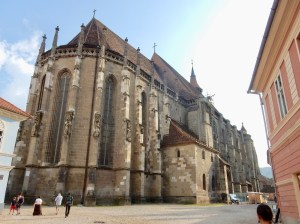
The next evening, back in Brasov, Loren and I took the local-guided walking tour around town, which started with visiting the “Black Church,” after it was partially destroyed by fire.
DSCN8819.jpg
Inspired by a particular sight, I wrote another poem:

     Thoughts in Brasov, A Three Verse Haiku
by Claire Adalyn Wright

     A shop named Ravel
brought to mind travel! And, un-
     
ravel? Or, ravel?

What is different
about those two words? I can

     not tell them apart…

     Never mind. There will
     be little unraveling
in our traveling.

So, since we are visiting in Transylvania, I must mention Dracula. His character makes this area a tourist destination, and the locals remind us with frequent advertising. We drove by Bran Castle, where Vlad “The Impaler,” who is thought to have inspired author Bram Stoker’s novel, was once imprisoned. We did not go inside. I also must mention that I have not noticed a single local person who sounds like a Transylvanian vampire. Years ago I did notice some similarity from my first times of hearing a few different Unitarian seminarians who visited California from Transylvania over the years who preached at our congregation while they were studying at Starr King School for the Ministry in Berkeley. Maybe it is because I have been hearing other European accents for the past year? Or is it that I am used to this particular accent now from my years at UUFS?
DSCN8858 2.jpg
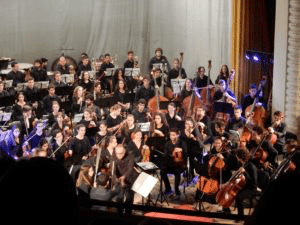
We also drove by Rasnov Castle, then stopped at Peles Castle to walk through the garden and visit the monastery. We arrived that evening in Sinaia – said Seh-nigh-a, in time for an Enesco free classical concert by a Portuguese Youth Orchestra. It featured Beethoven’s 5th among other pieces. And it was obvious that it is August – holiday time in Europe! The hall was so crowded that we only found one proper seat… which I offered to Loren and I sat on a short flight of stairs in an aisle. The advantage was that when a seat next to Loren was available after others left early, I had the privilege to view the orchestra from the opposite side of the hall as well.
pastedGraphic_13.png pastedGraphic_14.png
The next day we stopped to see George Enescu’s Villa, named “Luminis.” After touring the home we purchased a CD of his music which entertained us as we then drove through the Bucegi mountains of the Carpathian range. We stopped to take a couple of short hikes in the countryside. After dinner we had a nice walk around the hilly neighborhoods of Sinaia and learned that Queen Anne of Romania had died and her funeral procession was being brought to Peles Castle.
pastedGraphic_15.png
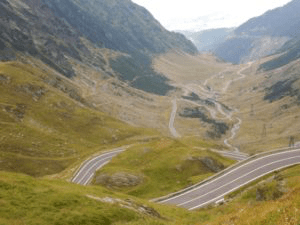
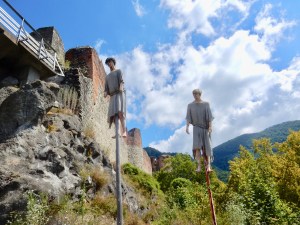
All our mountain driving and hiking had prepared us for the long and winding drive through the Transylvanian Alps to Sibiu – said Sib-e-u, in south Romania. To get there we drove on the Transfagarasanan, a military road created at the order of Romanian Communist Leader Ceausescu many years ago. Along the way we stopped to climbthe 1,480 steps to Poienari Fortress which literally depicts a couple of victims of Vlad III, Prince of Wallachia in the fifteenth century. Hence his nicknames, Vlad The Impaler, then Drakula.
pastedGraphic_17.png DSCN9021.jpg
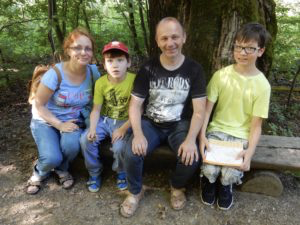
On a happier note, I also have to mention our new friends and their sons, from Poland. They shared our first AirBnB home in Romania in Danesti in the Maramures region. We enjoyed several conversations in the common kitchen, family area and yard. When we were leaving, they said they were staying a few more days, and that they would see us again. As Loren and I drove the Transfagarasan, we stopped for lunch to sit near a waterfall beside our car. As we sat, a car going the other direction pulled over and stopped. Who was in it? Our Polish friends and their boys! They said once again that we would see them later. I was so touched at seeing them again and commented several times on what a fun coincidence it had been to be in the same place at that point in time.
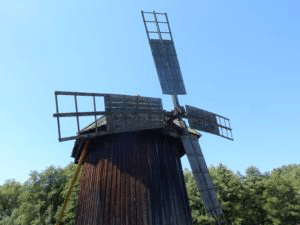
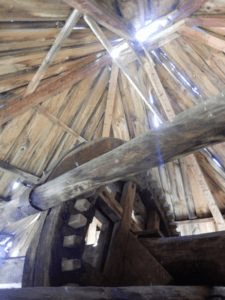
Today Loren and I spent several hours at Astra, an open air museum in Sibiu displaying Romanian life prior to modern conveniences. As we were leaving, it was uncanny to see our friends and their sons walking toward us! We do hope to see them again, as we are all visiting in Romania for our first times for a while longer…
pastedGraphic_19.png pastedGraphic_20.png pastedGraphic_21.png
PLEASE NOTE: While this week we have decent internet coverage, we may not have viable service in the countries we are visiting over the next three months. Please check back here, I will share my weekly post when and as often as I can.

Week 122 July 30, 2016

We started this week with a 4:30am taxi ride to the Marrakech airport, with a transfer through Bergamo, Italy, to Cluj, Romania. Our first impressions were of all the bright red roofed homes and buildings we saw as our airplane descended, and, how modern looking everything seemed. 
We picked up our rental car, arriving at our AirBnB in Danesti, Maramures in northern Romania at 21:30pm, which was 19:30pm Moroccan time, or 9:30pm and 5:30pm respectively. In all, we lost two hours of time.One thing we are finding common around Europe and parts of the Eastern Hemisphere where we have visited thus far, is the prevalent use of the 24 hour clock, in addition to the metric system of kilometers, meters, centimeters, hectares and kilograms. When I worked in the computer industry I became familiar with what was referred to as military time, which ensures there is no question that the hours after 12:00 are in the afternoon and evening, but, you have to remember for example that 15:00 is 3pm, 17:00 is 5pm, 19:00 is 7pm, etc. and not confuse them with 5pm, 7pm or 9pm. 
We slept well and long that first night – we never even heard the 6am church bells ring. On our first full day we met up with our AirBnB host in downtown Baia Mare for lunch, then obtained lei – also known as RUN for Romanian currency, from an ATM. Everywhere we have traveled outside of the US and the European Union, they have their own flavor of money besides Dollars and Euros. We took a gorgeous two hour drive to see Cimitirul Vesel, which means Merry or Cheerful Cemetary as advertised by either name in different places, or the Happy Cemetary as referred to by one local, in Sapanta. The only things that were not cheerful were the dark clouds and rain while we were there, and, the girl at the booth who took our five lei each admission. The headstones are all gaily decorated with photographs, poetry, or images to identify the person and how they died.
pastedGraphic.png pastedGraphic_1.png DSCN8036.JPG
We drove a different route making a full circle on the two hours ride back. Along the drive we waved hello to the country, Ukraine, which is just across the river. We arrived back in Danesti in time to meet our AirBnB host, his wife and their two sons for a delicious Romanian dinner at a local restaurant. They enjoy hosting guests to give their children a sense of having extended family. It was a lovely evening!
DSCN8078.jpg
We no longer find people hauling goods on donkeys, see mosques, or hear calls to prayer from the minarets, as in Morocco. Here, merchants haul their wares in horse drawn carts, while church bells ring out at 6am and the noon hour. Romanian farmers arrange their crops of hay to dry on the expanse of fields, using rakes made from honed tree branches. What is similar are the fields of sunflowers, the many nests of storks, the proudly displayed national flags. Here the flag is triple swathed blue, yellow and red, not what we have seen the past three weeks of red with a green star. We no longer see the many olive trees as in Morocco or Italy, nor do we see the duos or trios of militia patrols as we had became used to noticing everywhere in Morocco and Europe.
DSCN8188.jpg pastedGraphic_3.png
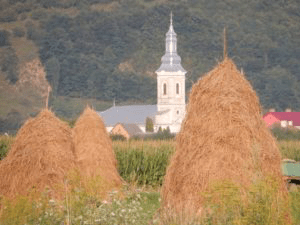
What we often smell here is smoke coming from plumes from the locals’ intentional burnings. Lots of rolling green hills are dotted everywhere with tall tan, red or brown haystacks, and many church steeples. We see dogs dart unfettered along narrow roads, amidst farmers driving slow moving vehicles, and speeding trucks and cars that routinely dare to pass lines of slower movers on mountain roads that are full of curves. Women wear flouncy knee length black skirts with white or white polka dot bandanas on their heads. This is some of what we have seen of the Romanian countryside thus far.
pastedGraphic_5.png
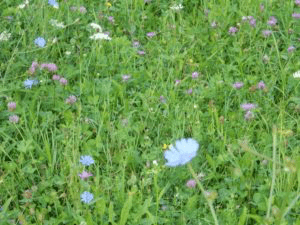
We enjoyed a nice hike in an oak forest that Loren noticed along the road, and saw  so many wildflowers along our drives,
pastedGraphic_6.png pastedGraphic_7.png
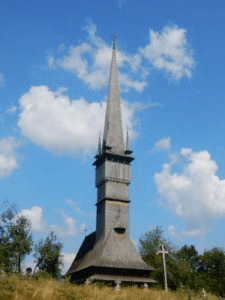
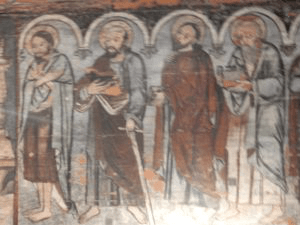
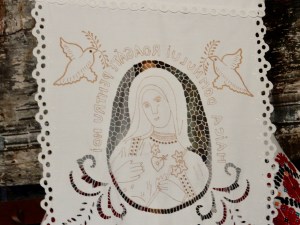
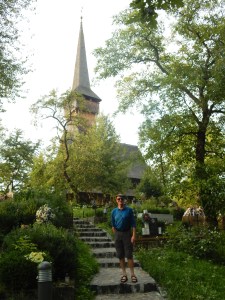
and, chased down a few of the many UNESCO protected oak churches in Maramures, decorated with well preserved paintings and intricately woven cloths.
pastedGraphic_8.png pastedGraphic_9.png DSCN8106.jpg
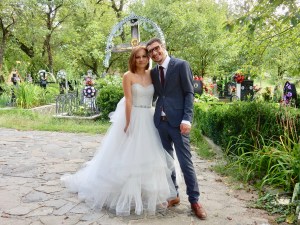
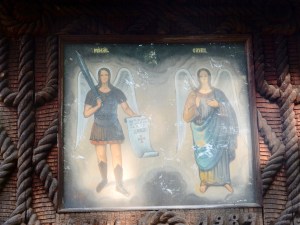
At one of the churches, we came across a bride and groom, returning a week after their wedding to take photographs. Another church honors the two Archangels, Michael and Gabriel.
DSCN8152.JPG DSCN8139.jpg DSCN8090.jpg
We also found somewhat familiar local artwork on an abandoned building near the market where we shopped…
pastedGraphic_13.png
Now, we are in Sighisoara, a lovely town of 30,000 people with a well preserved citadel. I must say that this word reminds me of when my brother played Dungeons and Dragons in years long past! The town boasts a beautiful clock tower that literally towers over the surrounding Medieval era structures that are home to a modern people.
DSCN8191.jpg DSCN8200.jpg
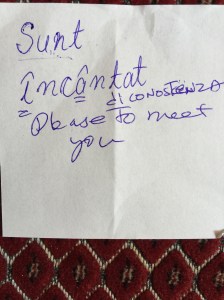
We have actually learned a little Romanian, which has been a bit similar to Italian in some ways. For example Buna seara, said boonah see-ra, means good evening; or sunt incantat de cunostinta, said soont oon-coon-tat day cos-no-stenza, means pleased to meet you; which are somewhat similar to the Italian greetings. However others are more unique to Romanian, like magazin mixt means a convenience store; multumesc, said moolt-zu-mesc, for thank you; and, drum bun, said droom boon, means something like good road, but maybe good travels on the road gives a more accurate meaning.
IMG_5909.jpg
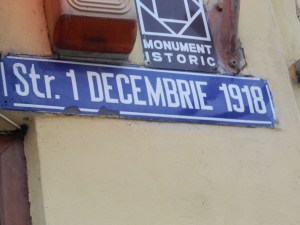
We have seen a few different street sign references to 1st December, 1918, and have learned that this was when Romania inherited Transylvania, Bessarabia and Bukovina as part of the treaty settlement after The Great War, what is now called World War I. The region of Transylvania, in the heart of Romania, is where the protestant Unitarian religion was born. Loren and I are excited that we will be meeting some Unitarians this weekend. Hopefully some of the people we will meet will be from our former partner church in that part of the Hungarian speaking area of Romania – in Szentivanlaborfalva which is Hungarian for Saint Ivan … … – I am uncertain what the lahbor falva words mean, but, in Romanian the village is called Santionlunca.
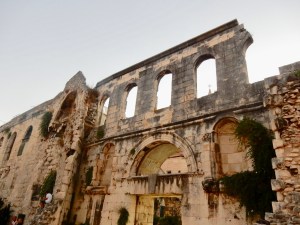
DSCN8197
PLEASE NOTE: While today we have an exceptional internet connection, we may not have service at times over the next three months. Please check back, I will make my weekly post when possible!

Week 121 July 23, 2016

Me to the internet at our AirBnB: “Lebas aleikum?”
     The internet at our AirBnB to me: “Lebas.”
That means in Moroccan Arabic that the internet is better here than last week! In reality I asked how the internet was, and it said it was fine. If you would like to, you can have another look at Week 120 now to see the full array of photos I would have posted but for the internet… but in doing that, it made this week’s post a little late.
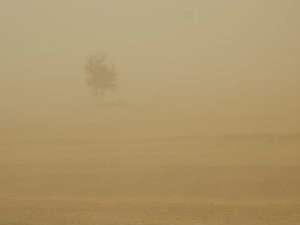
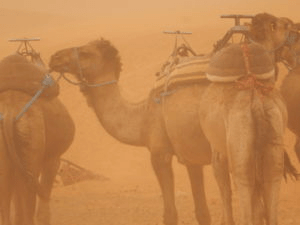
As we drove this week to Merzouga to begin our camel ride to a camp in the Sahara desert, we came across what appeared to be clouds that turned out to be a fierce sand storm! At times the only thing we saw out the front window was a sandy haze. Shrubs in the wind – partially obscured by blowing sand – appeared to be walking, while empty soft drink cans summersaulted end over end beside rolling tumbleweed. We have no idea how Mustapha, our driver found his way to the stables, but he did, and safely!  
pastedGraphic.png pastedGraphic_1.png pastedGraphic_2.png
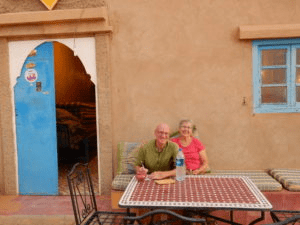
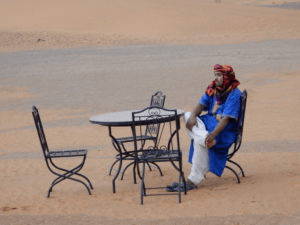
At our nomads’ compound – which they call an auberge – for hotel, heavy raindrops joined the swirling sand. We waited out the storm with “Moroccan whiskey” which is mint tea, but the decision was made to ditch our original plan to ride by camel caravan to overnight in the desert. We were told that this sort of storm could last for days. So, we missed seeing the sun set over the Sahara, but, we were privileged to survive not only a sand storm but also witness a rainstorm in the African desert. 
The wind and rain abated, resumed, and eventually abated again, while we were entertained by two extended lightning storms throwing jagged forks in the distance. We sat outside well into our evening of delicious dinner served outdoors, and more meaningful conversation about human rights and politics. We four tourists slept without further storm conditions on mattresses on the roof of the auberge, which seemed to be not out of the ordinary. Our rooms, which had the delightful scent of freshly burned incense, were still too stifling hot, even after leaving the all the doors and windows open.
pastedGraphic_3.png pastedGraphic_4.png pastedGraphic_5.png
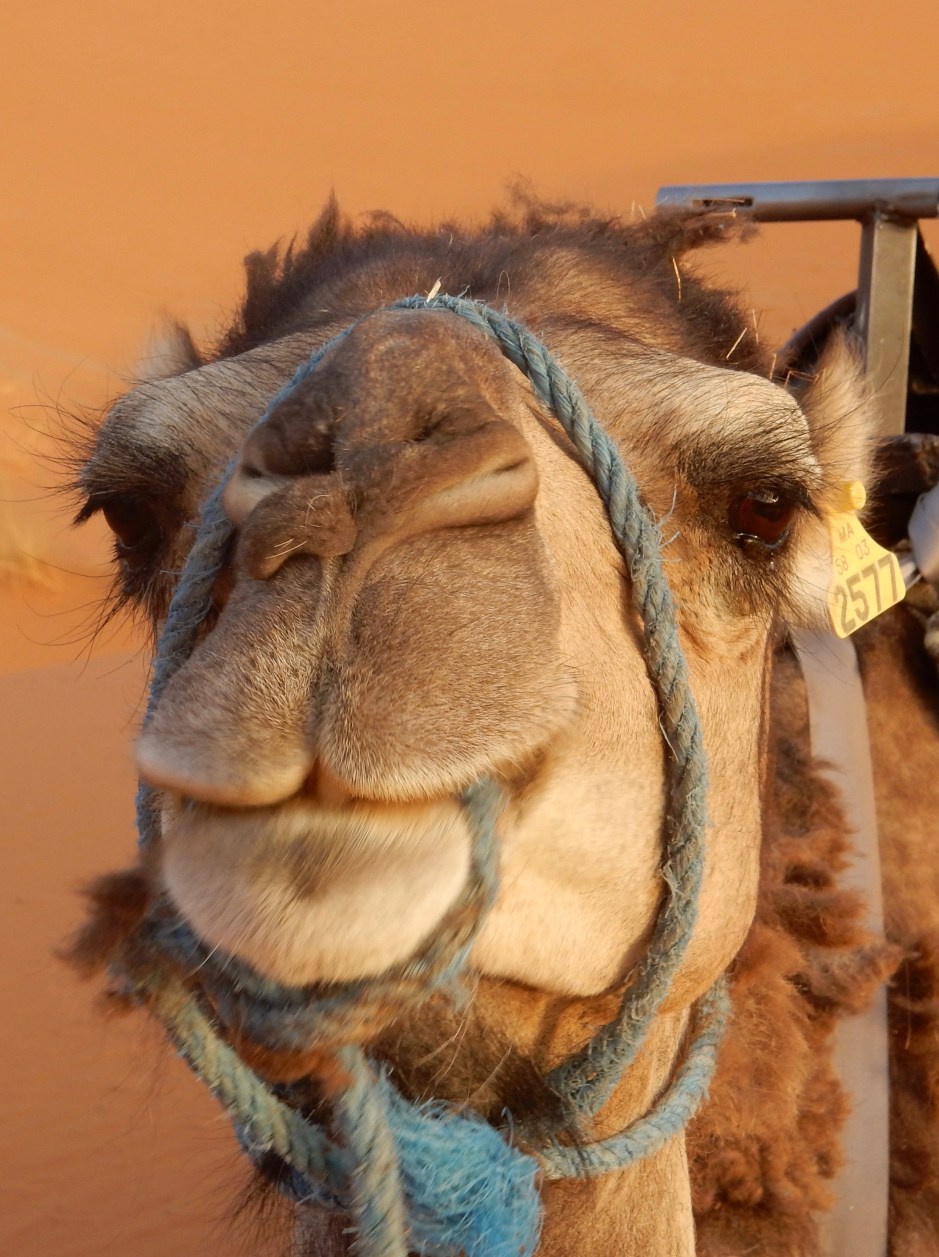
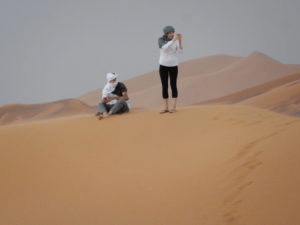
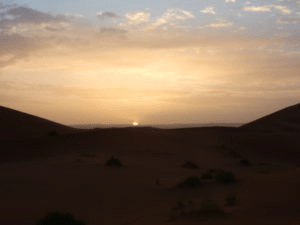
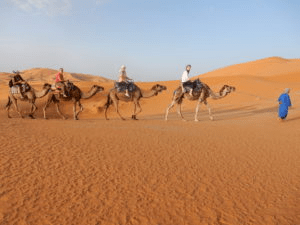
We awoke to our alarm at 4:30 for our dromedary ride – dromedary is the right name for these enormous animals because they have only one hump. I named mine Hob, for Love, in Arabic, then Loren named his Bob. We learned that all dromedary rides are given on males, the females are protected for reproduction. I was impressed by how gentle and calm these animals are. I experienced a relatively smooth ride, despite some shifting sands underfoot, and especially in the early morning pitch darkness. The sky slowly brightened and we witnessed a delightful sunrise near the camp where we would have stayed overnight, before our single file return ride to the auberge. I believe the artists for the character E.T. must have used the faces and personalities of these docile creatures as a model in their design…
pastedGraphic_6.png pastedGraphic_8.png
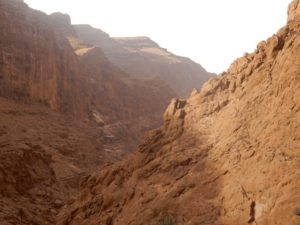
Just as the name Anasazi is considered derogatory to Native American Puebloans, and Negro is offensive to African Americans, native Moroccans prefer to be called Amazighen over Berber. Berber, though still heavily used, originally meant Barbarian – for simply “other than Greek” in ancient times, but since it has developed a poor connotation. This will likely take some time to be eliminated from use. From the Sahara desert, we drove to Gorges Todra, also known as Gorgeous Gorges. Todra means water, and water is life. It rained here – yet more water, then it slowed enough for us to take a drive into the gorge instead of our intended walk, as there was the possibility of flash flooding. But that was not actually an issue, so we walked back most of the way, with Mustafa kindly following in the van for safety.
pastedGraphic_9.png pastedGraphic_10.png
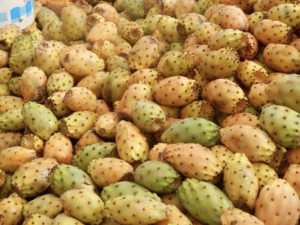
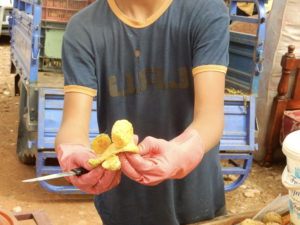
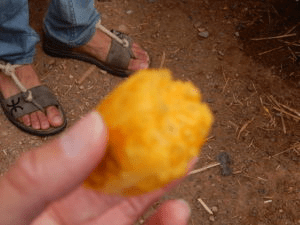
This week we tasted our first fichi d’India – the delicacy also known as prickly pear -or- tuna -or- paddle cactus fruit, which the locals say is helpful as an “intestinal” remedy. Regardless, it was a juicy, citrus-like treat with seeds. We found tables laden with them along the streets and in all the souks in Morocco, with a man at the ready with his knife to peel one for us should we want to buy any of them.
pastedGraphic_12.png pastedGraphic_13.png pastedGraphic_11.png
We stopped briefly in Quarzazate, which translates to without – quar, problems – zazate. How I wish that were so in all of the world! From there we drove to our accommodation in Aït Benhaddou on the Quarzazate River. Along the way we chanced upon a real live snake charmer, and Loren and one of the girls took him up on having the snake draped around their necks. Once settled in at our accommodation, we all hiked to the top of the nearby fortified city for great views and opportunities for understanding more of the casbah habitation of the days of old, as well as seeing part of where Lawrence of Arabia and Gladiator were filmed.
pastedGraphic_14.png pastedGraphic_15.png
Here, as with many of our three and four course dinners, Loren and I drank “Moroccan champagne” meaning sparkling water! There are very few restaurants that offer alcohol, wine or beer on the menu. After all, this is an Islamic country, where the faithful abstain from drinking alcoholic beverages. Younes, our guide, has taught us a little Arabic, and here he is isolating the spelling of just the word Shokran said show-kran – Thank You, from the rest of the words on a sign which said Thank you for your cooperation. I even remembered to start looking at the Arabic letters starting on the left and reading right!
pastedGraphic_16.png
We had our longest drive day of the tour, which included going over the High Atlas mountains on our way to Essaouira for two nights on the Atlantic Ocean. Once there we visited the medina, the beach and harbor, and simply rested in this very popular town, as the cool ocean breezes draw the locals from Marrakech where the summer heats rise well over 100 degrees Fahrenheit until very late each evening. The idea of protection from the evil eye is as important in Morocco as I understood it to be in Turkey. Women in the mountain villages are able to withstand the intense heat in their all black hijab – head scarves, and djellaba – full length robes, in that they believe the black helps to ward off the evil eye.
pastedGraphic_17.png
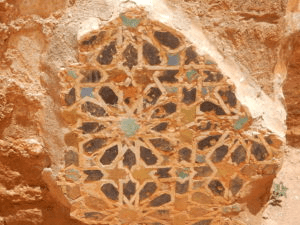
Now we are already back in Marrakech. We had a city walking tour of gardens, the palace, medina, souk and main square. I learned more, for example that the many eight pointed stars in the decorative mosaics around the country that I have become so enamored of, as well as the unique shaped windows and doors – a familiar sight of rounded and coming to a point at the top, and rectangular at the bottom, are also protection from the evil eye. We learned that the many geometric shapes in the designs seen in so many places are representative of Allah – God, in the abstract.
pastedGraphic_18.png pastedGraphic_19.png
Our small tour group had our farewell meeting, then we enjoyed watching a little of the Olympic pre-trial competitions together, which was reminiscent enjoyment as the football, or what Americans would call soccer, game we watched together at the start of the tour.
DSCN7984
In our 15 day tour of Morocco, and at our AirBnB in Marrakech we have felt very welcomed. We have seen so much of this country in this short period of time. We visited most of the major cities, traveled over parts of the High Atlas, Moyen – or middle, Atlas, and the Anti – or small, Atlas mountains, which separate the Mediterranean Sea from the Sahara Desert. We have stayed in charming villages, visited with some of the locals, and relaxed by the coast of the Atlantic Ocean.
We had the pleasure of traveling with two beautiful young women, and were guided and driven by two generous in spirit native Moroccans. Just as we found of our 75 days in 11 countries in south east Africa earlier this year, as well as with most of our over two years of journeying, just 15 days in north Africa’s Morocco feels like a whirlwind visit, giving us only a tiny sampling of all there is to see, do and people to meet. It was most definitely a worthwhile experience. Now we have been to 12 of Africa’s 54 countries… and we will go to another few new – well, to us, countries in Eastern Europe, beginning with Romania, then to Croatia and others in the Balkans.
One final thought this week – I am learning that there seems to be at least one common theme among long term travelers. That the reason to get away is to be able to ponder, reflect, or think more clearly. This is noted in some of Graham Nash’s lyrics to the song, Marrakesh Express with these words:
“Sweeping cobwebs from the edges of my mind, 
   Had to get away to see what we could find.”
For me, I most appreciate being on this journey because I am learning things that I never made time for learning while living at home. And, visiting in person brings a place to life for me. Loren has discovered and repeatedly says when asked about the “best” places we have seen, “It is inside myself.”
PLEASE NOTE: While this week we have decent internet coverage, we may not in the countries that we are visiting in the next few weeks. Please check back, I will post weekly when and as often as I can.

Week 120 July 16, 2016

Salam – Hello in Moroccan! Thank you to all our family and friends who reached out to us again and again with all the turmoil in the world. We always so appreciate hearing from you!
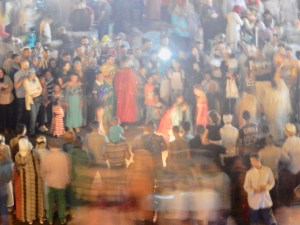
We began this week still in Marrakech. One evening our AirBnB host and her partner made us our first tagine – a traditional Moroccan dish made in a unique cone shaped top pottery cookery and sold all over Morocco. We enjoyed the deliciousdinner with our hosts’ friends. Later we walked with her the long way to Jemaa el Fna – the large square in the Medina. We saw the main mosque lights, with a waxing crescent moon shining behind it. We were a bit taken aback by the crowds – partly because it was the first Friday night out after Ramadan, though it is not unusual to have such crowds on Fridays, or, to have such crowds every night. So, you can choose whichever explanation you like, depending on which person’s opinion you choose to believe!
DSCN6107.jpg DSCN6112.jpg DSCN6138.jpg
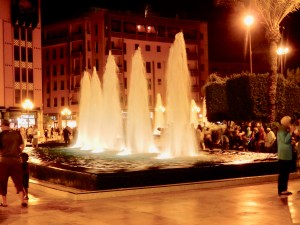
We three enjoyed fresh squeezed orange juice from among the many OJ vendors. And we walked by the various meat stalls specifically to see the cooked sheep heads. Really! I could not and would not make a photo of them lined up with their mouths slightly open showing their little teeth… Then we went to a rooftop lounge for great panoramic views of the Medina, and we walked us through part of the Souk or Souq – the market, which reminded me of a more upscale version of one that I had walked through in Rwanda in December. As we walked back to the apartment, we enjoyed a snack of fresh dried apricots that Loren had bought, and along the way we came across a fun fountain.
DSCN6142.jpg
I must correct myself about having my first Turkish Bath in South Africa in February. What I had was merely a steam bath, a timid plunge in a cold pool, and a short nap in a private cubby with a bed. This week I thoroughly luxuriated in a decadent Hamam followed by a massage. In a steamy room, my naked body was doused by the bath house woman using pots full of alternating hot, cool or warm water; then rubbed, scrubbed, doused again; lathered with mud, doused, shampooed, conditioned, and doused once more. After a shower, I rested on a leather lounge, sipping mint tea while watching entertaining Moroccan short films reminiscent of Bollywood style. Then I received a massage with oil and had a catnap before resting again on the lounge. Based on the description I gave Loren of my hamam in South Africa, he only signed up for a massage… 
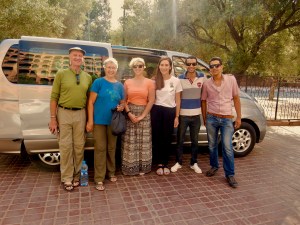
We then met our tour group who are just six people counting our guide and our driver. We left Marrakech, known as The Red City, early in the morning for Casablanca – The White City. On the way in the van, our guide who is a wealth of information about his native country, tried to teach us more Arabic words and phrases. With just two other travel mates, lovely young women friends from New Zealand – one on her way home from a work visa in London, the other about to begin a work visa in London, I have not hesitated to ask my many questions.
DSCN6152.jpg
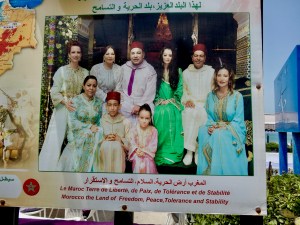
We have learned that Morocco has four Imperial cities: Rabat, Marrakech, Meknes, and Fes – meaning that at one time each was the capitol for a different royal dynasty. The current dynasty has reigned since the 17th century and Mohammed VI is King. He and his family are clearly beloved. During “Arab Spring” in 2011, he guided Morocco through a peaceful change of government to Monarchy with Parliament style government, and, the country has their first highly visible female royalty in Mohammed VI’s beautiful wife. There are many tributes to King Mohammed, his father, Hassan II and grandfather, Mohammad V around the country, and people seem expectant that the royal Prince, Hassan III, or dare I suggest perhaps his younger sister, will one day succeed the father.
DSCN6158.jpg
The country proudly displays red flags with a silk green five-point star – red representing the blood that Moroccans are willing to shed for their country (which they have done with regard to the disputed border with land now known as Western Sahara to the southwest), green for peace, and five points for the five pillars of Islam: 1. There is only one God, Allah, and Mohammed is his Prophet, 2. Pray five times each day, 3. Fast at Ramadan, 4. Give Alms to the needy, and, 5. Make a Pilgrimage to Mecca – Hajj – at least once, but that is only if you are able and can afford it.
DSCN6310.jpg
The name of the religion Islam means Peace, and this country truly feels peaceful, even in its largest city, Casablanca which is home to five million people. We visited the impressive Hassan II Mosque, the largest in Africa and 3rd largest in the world – after Mecca and Medina. This one boasts the tallest Minaret in the world. It holds 25,000 people inside and another 80,000 people can similtaneously attend services – broadcast by loudspeaker, outside. The interior is even more impressive than the outside, well, in a different way.
DSCN6167.jpg
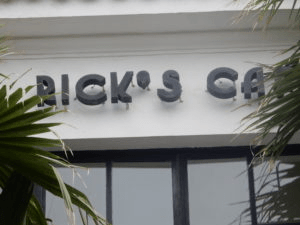
We also stopped outside Rick’s Cafe – of Humphrey Bogart’s Casablanca fame… Then over dinner we had the perfect seats to watch start-to-finish the exciting finale of Euro Football – soccer, where Portugal beat France in an extremely close match that ended in overtime! I was just sorry to see injuries happen to several players.
pastedGraphic_12.png
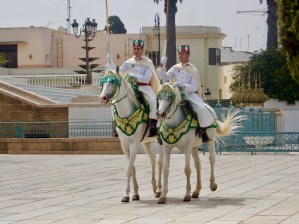
We traveled on to Rabat – another White City. The cities are nicknamed for the mainly uniform color of the homes and buildings. For Moroccan Muslims, the outsides of their dwellings are supposed to be kept nondescript, to convey the equality of all. Inside they can decorate and differentiate to their hearts’ content. We had a city tour with a guide from Rabat –  just as we had experienced during one part of our tour last winter in southeast Africa, our own guide was not allowed to show us around everywhere in Morocco – this allows the local guides of each city to have employment, and gives a bit of time off to our main guide. This city guide took us first to see the Mausoleum/Tomb of Hassan II, where we could look down into the chamber from a balcony..
DSCN6335.jpg DSCN6336.jpg DSCN6368.jpg
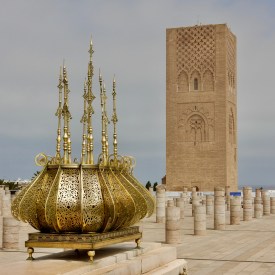
He also took us to see Hassan tower, visit Oudaia Kasbah – castle or fortified walled city,

DSCN6355.jpg DSCN6406.jpg


the Royal Palace, being on the same grounds as the country’s Pentagon and Royal Mosque,
pastedGraphic_18.png
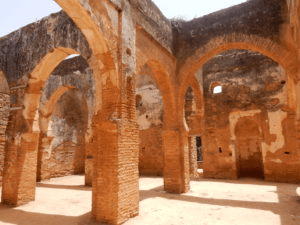
and, Chellah of Oudaia – an archaeological site of ancient Moroccan culture and gardens.
pastedGraphic_20.png pastedGraphic_21.png
There was a terrible earthquake in Lisbon in 1755 with a resultant tsunami that devastated several areas of Morocco…
    “Are you then sure, the power which would create, 
     The universe and fix the laws of fate, 
     Could not have found for man a proper place,
     But earthquakes must destroy the human race?”
   “Lisbon Earthquake Poem” (1755)
by Voltaire
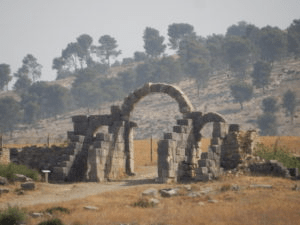
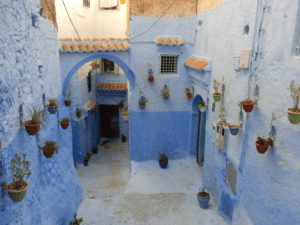
On our way to Chefchaouen – The Blue City, we toured ancient Roman ruins at Volubilis, which, until the 1755 earthquake, were very well preserved. Here we had another local guide with a tremendous knowledge to share from, thanks to his master’s degree in history. This site was partly a Roman military retirement community. In addition to explaining the ruins, he offered interesting stories and tidbits like, SPA (think terme or hamam) is the acronym for Sanum per Acqua – health through water, in Latin of course; and, that originally the swastika symbol which is preserved in many of the mosaic floor designs in the homes meant Peace or Good Fortune too, I found online. At Chefchaouen in the Rif mountains we had a sunset view at dinner after a walking tour of the Medina. With a free morning Loren and I took the hike up to a mosque on a hill for great views.
pastedGraphic_22.png pastedGraphic_24.png
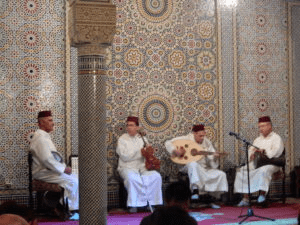
That evening we had dinner in Fes with entertainment of musicians including one who played the Oud – sounds like rude, but there are no r’s in Arabic, drummers, a magician, belly dancers, and, with some audience participation, was as memorable as the Pastilla, a sweet chicken and honey dish in filo-like dough, a little like the Greek desert, Baklava.
pastedGraphic_28.png
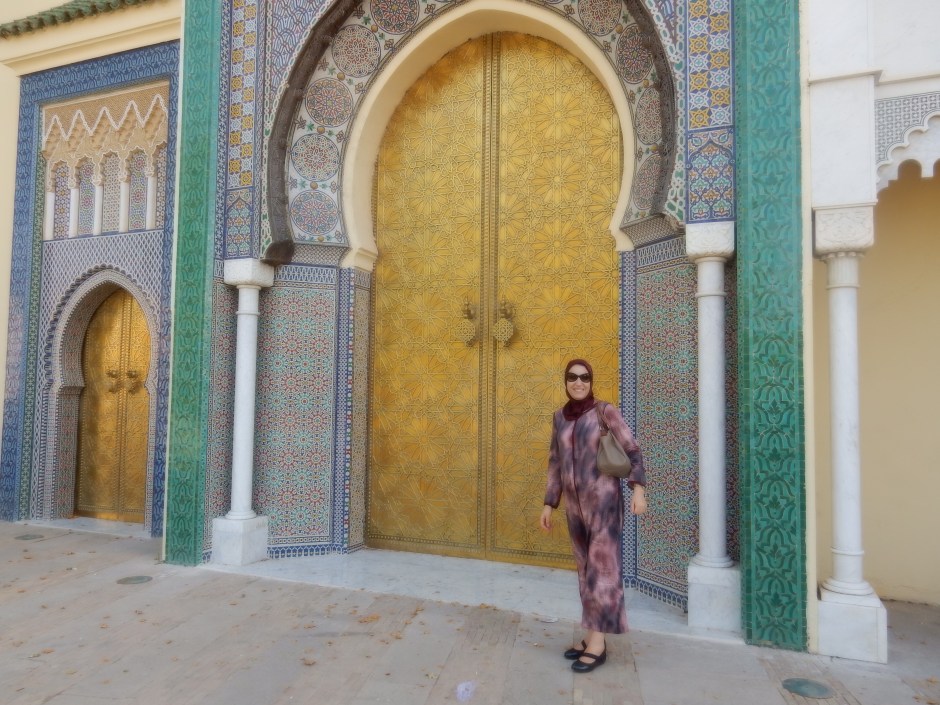
The next day in Fes – often misspelled as Fez, we met our guide for a city tour. Another wonderful person, this woman’s name means Generous. She took us to see a different Royal palace with immense gold doors, the Jewish quarter with colorful products sold, 

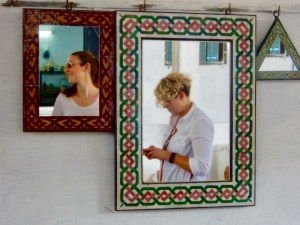
for the view from an old fort, to a ceramics shop, where the level of detail done by hand is incredible. I had a little fun with the mirrors on the wall for sale, that partially show the meticulous decoration,

DSCN6838.jpg
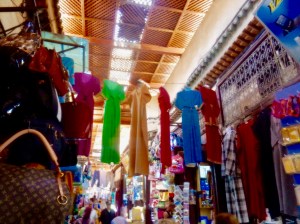
then we visited the Medina and Souk. This medina is the largest in the world with 9,500 streets, and is very old dating from the 800’s! The streets are so narrow that only donkeys are used to transport goods. There are lots of goods for sale, from technogical to clothing, jewelry to meats, produce, souvenirs, artwork, crafts, anything you can imagine. We also saw the oldest university in the world, now a Theological school, founded by Fatima who was the wealthy daughter of a successful businessman. Also in the Medina are mosques, schools, residences, and places to eat, with so many intricate stucco and mosaic decorations, as we have seen all over Morocco so far. After lunch, we visited a tannery which smells I could have foregone, then a weaver of silks. We were happy for our dear guide after learning that she is four months pregnant!
DSCN6913.jpg
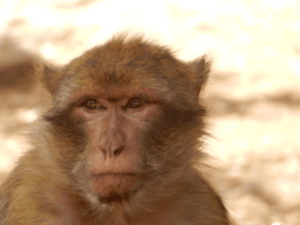
Now we have driven through parts of the Atlas mountains, enjoying a morning walk in Ifrane and an evening hike in Midelt. The native Atlas lions are extinct in the wild, but we did get to see Margot monkeys in Ifrane. While some of the wealthier people build large cinder block homes, they only use them for special occasions – the prefer to live in the mud homes of their ancestors, because, unlike the cinder block homes, the mud homes stay cool in summer – without air conditioning, and warm in winter. We culminated the day for delightful tea with a local family before dinner.
pastedGraphic_39.png pastedGraphic_40.png

Our hearts go out to the people in Bari, Nice and especially again to Turkey this week… where Loren and I would have been had we not decided to drastically change our plans. We had a meaningful discussion after dinner about extremism before waking up to the news of the attempted coup in Istanbul. One thing I am so aware of as we travel is how difficult it is to avoid miscommunication within the same language, much less across differences in language.

This evening we will ride camels into the Sahara desert for an overnight experience under the stars, because it will be too hot to sleep in tents!

Week 119 July 9, 2016


This week we were still on Lake Garda for the Italy versus Germany football – or as we Americans would say, soccer championship game. It began at 9pm and went into overtime. The neighbors were passionately loud, some even had horns quite like on New Year’s Eve. Germany won, which we understand is unusual when playing Italy. 

The next day our native Italian friends picked us up and we had a snack in the town of Torre, where we also made a foto together in the same place where American friends of ours – who we had suggested to visit these Italian friends a few years ago – had also made a photo together. Yes, that is right, we learned that the Italians say, “make a photo, not “take a photo.” I think their choice of wording makes better sense.

pastedGraphic.png IMG_5555.JPG pastedGraphic_1.png DSCN6001.jpg

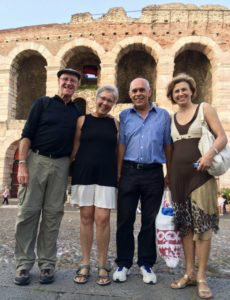
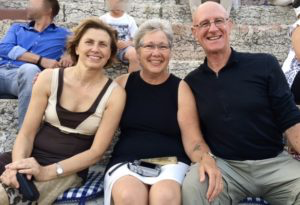
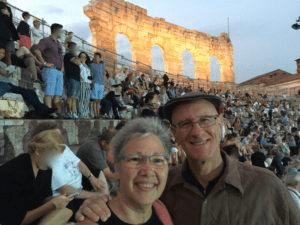
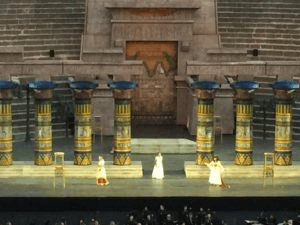
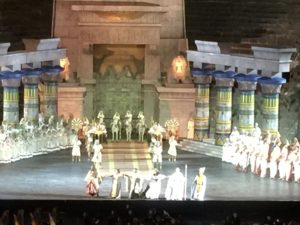
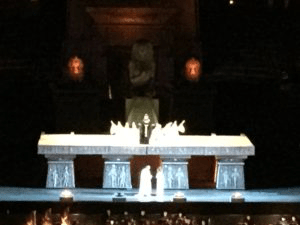
We had our last three days in our beloved Italy with our friends in their beautiful home. We so enjoyed seeing some of their family members again, and, sharing more wonderful time together. Extra special was that we kept one half of a 21 year old promise to go to L’Arena together. We had heard of it from these friends  when we had first met them on a train from Venice to Verona. They were traveling with their two sons – their younger daughter was with her Nonna and Nonno. Their children are all now masters and doctorate level students! Our friends had taught us then that this arena is the best preserved of all in the ancient Roman Empire, and near their home. We made a date then to see Romeo and Juliet together here some day. The other half of our promise must wait, because Romeo e Giulietta was not playing now. Instead, we saw Aida together!

pastedGraphic_3.png pastedGraphic_4.png pastedGraphic_5.png

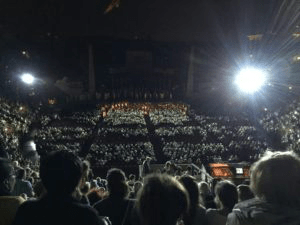
This evening was a highlight of my life! It fulfilled part of a long-dreamed-of promise, the weather was perfect, the performance magnificent, and, to know that somewhere between 2,500-1,500 years ago some members of Roman society had also sat on the very same marble block seats. Fortunately our friends brought seat cushions for all of us! It was an incredible feeling. The performance was as if I were witnessing a live 1940’s Hollywood production. This company had even chosen to revert the production as it had been performed when L’Arena opened 103 years ago. And, for the first time, they displayed the words in Italian with English translations beneath them, shown on large screens along two sides of the arena. Bravo! Bravo!

pastedGraphic_6.png pastedGraphic_7.png pastedGraphic_8.png

Since this night was a life highlight for me, I want to mention too how the first two hours were too long because the libretto included more repetition than – I felt, was necessary. Perhaps that is why more modern versions had changed the performance. When the second act ended I had no idea how I would survive the next two, sitting on a stone seat, even with the cushion. However, for the second two hours I was so engrossed in the drama and the entourage on stage that, if there was any repetition, I was unaware of it. In all it was an awesome experience. I wish everyone could see this opera, and, in this spectacular setting. Oh, and, as it had begun at 9pm for the necessary effects of the dark sky, we were leaving L’Arena at 1am. It was all very well worth it!

pastedGraphic_9.png

How fun it was to also be in Italy for the Fourth of July! We enjoyed an American style BBQ one evening, which, like all the meals we enjoyed together, was outstanding.

pastedGraphic_10.png pastedGraphic_11.png

We also had a memorable day hike with our friends with their delightful dog, on Monte Baldo. There were very few others on the trail, allowing the dog to be off leash for most of the time. It was joyful to see her escapades in that freedom.

pastedGraphic_12.png

One reflection I had as we prepared to leave Italy was how many smiles have come to me when noticing the cheerful colors that some Italian uomini – said woe-min-e – meaning men, which was initially quite confusing for me because it sounds so much like ‘women,’ and donne – said doh-nay, meaning women, wear. For example I am thinking of their bright powder blues, spring greens, olive greens, and vibrant shades of oranges or reds for their pants, and, rich pink shirts, or smart striped suit jackets with matching color solid shirt or pants. These are just a little of what I saw which was most refreshing and invigorating to see!

Our friends then drove us to the Bologna airport, where we enjoyed their delicious verdure – vegetable torte together picnic style, as they referred to us as “the Globe trotters.” We said our sad, hopeful arriverdverci – bye, see you agains!, before we went through security for our flights to Marrakech via Casablanca. Here are our friends’ nostalgic photos from when we met about twenty years ago:

pastedGraphic_13 pastedGraphic_14.png DSCN6105.jpg

We did not see Loren’s checked backpack among the baggage being loaded onto our second plane…

I have deeply experienced how music, smiles, and other facial expressions can overcome differences in language and culture. We shared some friendly smiles and gestures with a couple of the Moroccan travelers on our flights, though we speak no Arabic, Berber or French. Some speak Italian and many do speak English. My immediate impression was of our clothing differences – so many women were wearing headscarves, usually colorfully coordinated with their other clothing. Many men wear taqiyah – skull caps. Some of the men and the women wear long sleeve, floor length robes.

As it turned out, Loren’s backpack did not arrive with our flight…

Our first night in Marrakech was the one-day Eid – said eed, festival that follows Ramadan in Islam. So everything, including markets, were closed. We have a lovely, former Canadian AirBnB host, and, the driver she had found for us recommended the only restaurant he knew of that would be open. Our host joined us and it turned out to be – of all things – an Italian pizzeria!

There was no call that night about Loren’s backpack as we had hoped for from the airport…

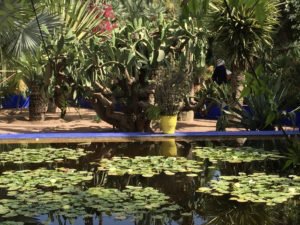
On our first full day in Marrakech we visited Yves St Laurent’s gift to Marrakech, the Jardin Majorelle – Gardens of Majorelle. Thank you YSL! As for our trip to Morocco, my brother joked, “How can you resist when Loren says, ‘Come with me to the Casbah,’” which I am looking forward to doing later tonight, and a few times during our upcoming three week tour! We ended this week with finding the cafes in Marrakech lined with chairs full of fans facing large screen televisions, to watch the football match between Germany and France. France won, and in the grand finale France will face Portugal.

pastedGraphic_16.png pastedGraphic_17.png pastedGraphic_18.png

Our host and driver have been very helpful, and finally we learned that Loren’s luggage had now arrived on another flight. Our driver took us back to the airport to retrieve it. How fortunate that we were staying in Marrakech for three days – just long enough before our tour begins to claim it. Now Loren has his changes of clothes for the tour!


PLEASE NOTE: While this week we have internet, we may not have viable service in the countries we are visiting over the next three months. Please check back here, I will share my weekly post when and as often as I can.